

Cartier: The Exhibition
My first visit to a Cartier exhibition wasn’t planned.
It came at a time when I simply needed somewhere else to be.
Just three weeks earlier, I had said goodbye to my beloved miniature Dachshund, Nudel. He was fifteen years old, and after losing him, home felt unbearably quiet, especially on weekends. Rather than sit with the silence, I found comfort in travelling and visiting galleries.
The first was the Colours of Impressionism: Masterpieces from the Musée d’Orsay exhibition at the Art Gallery of South Australia in Adelaide.
A week later, I travelled to Canberra to see Cartier: The Exhibition at the National Gallery of Australia (NGA). That was July 2018.
Almost eight years later (June 2026), Mum and I visited the Cartier exhibition at the National Gallery of Victoria (NGV). Some of the extraordinary pieces were instantly familiar, while others felt entirely new. Seeing them through older eyes – and with a greater appreciation for craftsmanship, history and design – made the experience every bit as captivating as the first time.
This article is a reflection on that exhibition, the remarkable history of Cartier, and some of the pieces that captured my imagination most.
Patiala Necklace
One of my favourite pieces is the Patiala Necklace made in 1928 for the Indian royal, Bhupinder Singh. In 20023, the necklace was valued at two billion Euros (approximately 3.3 billion AUD).
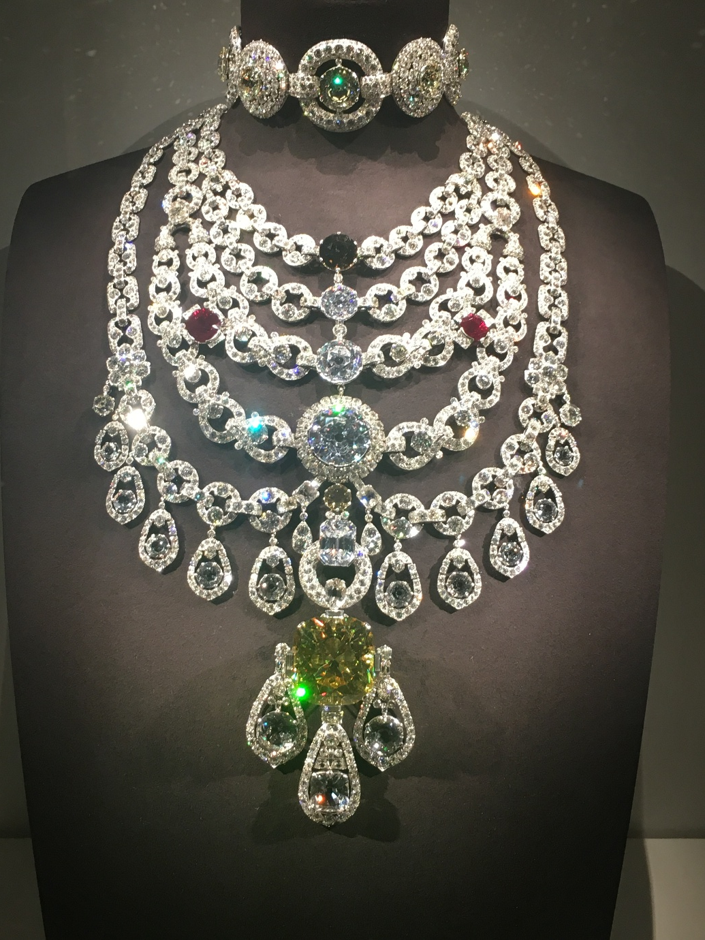
The necklace includes five chains, as well as a neck collar, and contain 2,930 diamonds. The centrepiece is a diamond of 234 carats.
The necklace disappeared in around 1948, and was last pictured in 1946, worn by the then Maharaja, and son on Bhupinder Singh.
Clocks
Founded in 1847, Cartier did not begin producing clocks until the early 1900s.
At the 1900 Exposition Universelle (World’s Fair) in Paris, Louis Cartier encountered the spectacular enamelled creations of Peter Carl Fabergé. Inspired by what he saw, Cartier began making elegant desk clocks that match the artistic quality of its jewellery.
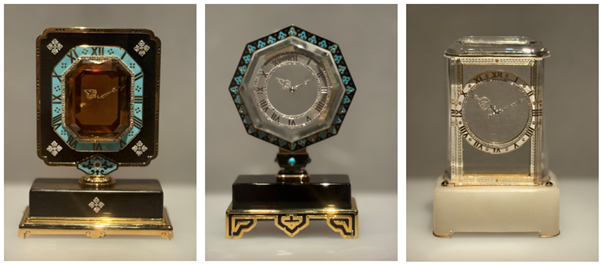
In about 1911, Louis Cartier began working with an exceptionally gifted young clockmaker named Maurice Couët, and “together they transformed decorative clocks into works of engineering theatre.”
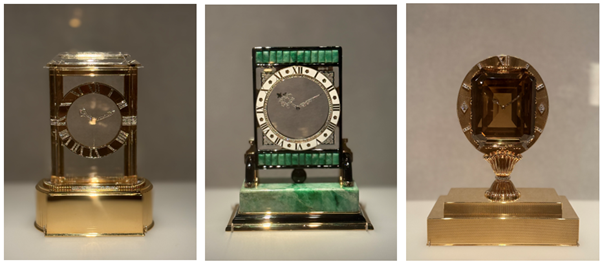
One of the things I find most fascinating is that Cartier never treated these clocks as “timepieces.”
They treated them as works of art that happened to tell the time.
That philosophy is why they feel timeless even today.
When you stand in front of a Cartier Clock, you’re looking at far more than a clock. You’re seeing the combined work of jewellers, stone cutters, goldsmiths, enamellers, engineers, and master clockmakers; all collaborating to create an object that still makes people stop and ask, “How is that possible?”
Tiaras
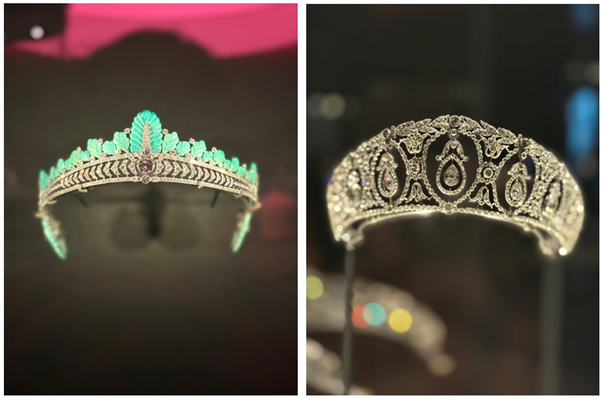
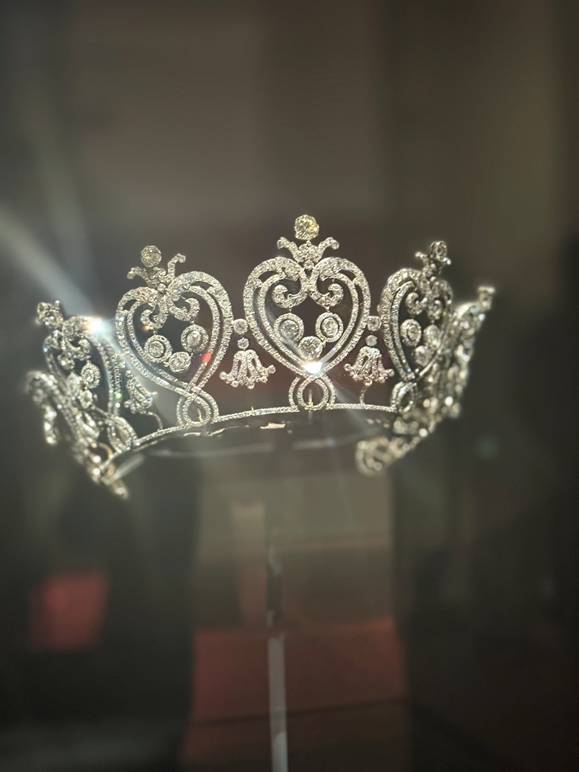
Few jewellers are as closely associated with the tiara as Cartier.
For more than a century, Cartier has created some of the world’s most celebrated tiaras, adorning queens, princesses, aristocrats, heiresses, and, more recently, modern brides. While many jewellery houses produced tiaras during the late nineteenth and early twentieth centuries, Cartier helped redefine what a tiara could be; lighter, more wearable, and unmistakably elegant.
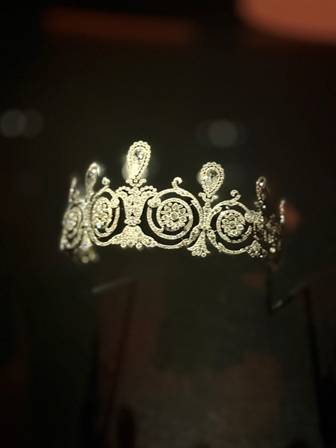
The Belle Époque: The Golden Age of the Tiara
The great era of Cartier tiaras began in the late 1890s and continued into the 1930s.
Europe’s aristocracy was at its height, and royal courts across Britain, France, Russia, Spain, and Belgium maintained elaborate social calendars filled with state banquets, balls, and court presentations. Wearing a tiara was not reserved for weddings; it was an expected part of formal evening dress for women of rank.
As one of the leading jewellers in Paris and London, Cartier became the house of choice for many royal families and wealthy clients seeking exceptional craftsmanship.
The Platinum Revolution
One of Cartier’s greatest innovations was its early adoption of platinum.
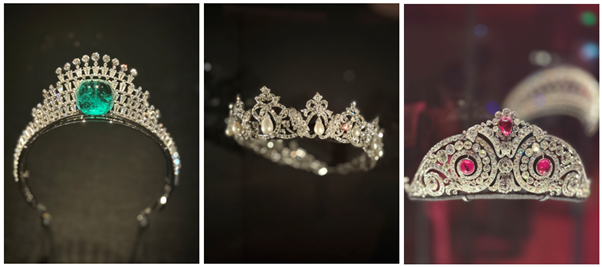
Around the turn of the twentieth century, advances in metalworking made platinum practical for jewellery. Stronger than gold, platinum allowed Cartier’s craftsmen to create incredibly fine settings that securely held diamonds while using very little visible metal.
The result was revolutionary.
Rather than seeing metal, the eye saw almost nothing but diamonds, giving Cartier tiaras their distinctive airy, lace-like appearance.
Some Personal Favourites
Like most visitors, I had my own favourites.
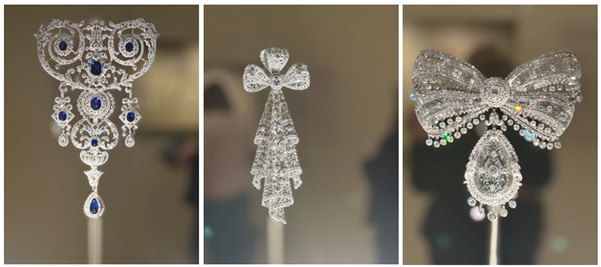
I’ve always loved brooches. Even before they became fashionable again, I admired them for their detail, craftsmanship and ability to completely change the look of an outfit.
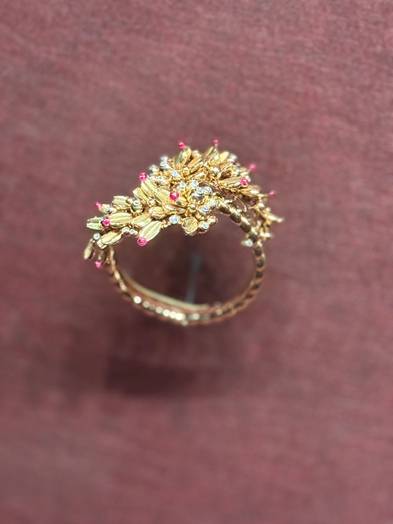
The rings and earrings were equally impressive. Some were bold and sculptural, while others proved that simple can be just as striking. Looking at them closely, it was impossible not to appreciate the skill required to create them.
And then there were the tiaras.
Seeing them in person gives you a completely different perspective. The photographs don’t quite capture how delicate they are. Their intricate settings, fine detail and remarkable craftsmanship make them feel surprisingly light despite the thousands of diamonds they contain.
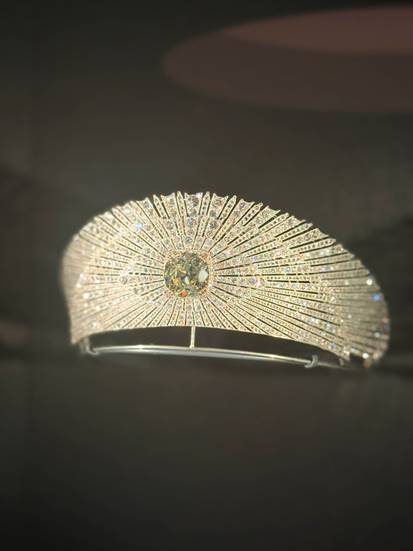
One thing the exhibition reinforced was that truly exceptional design doesn’t date.
Whether it’s a brooch, a ring, a pair of earrings or a tiara, beautiful craftsmanship will always outlast fashion.
The Cartier Exhibition is part of the Melbourne Winter Masterpieces, and is open until 4 October 2026.
Further information can be found on the NGV website: CARTIER: Melbourne Winter Masterpieces® 2026 | NGV.
Whether you’re fascinated by jewellery, history, design or exceptional craftsmanship, Cartier: The Exhibition is well worth visiting.
More than a display of extraordinary jewels, it’s a celebration of artistry, innovation and timeless design. If you’re in Melbourne before 4 October 2026, I highly recommend adding it to your list.
You were all the love letters I ever wrote
You Might Also Like
Simplicity Is A Style Strategy, Not A Limitation
Dress with Intention: Creating Your Future Self Through Style
Why Buying Second-Hand Clothes Is a Smart, Sustainable Choice