
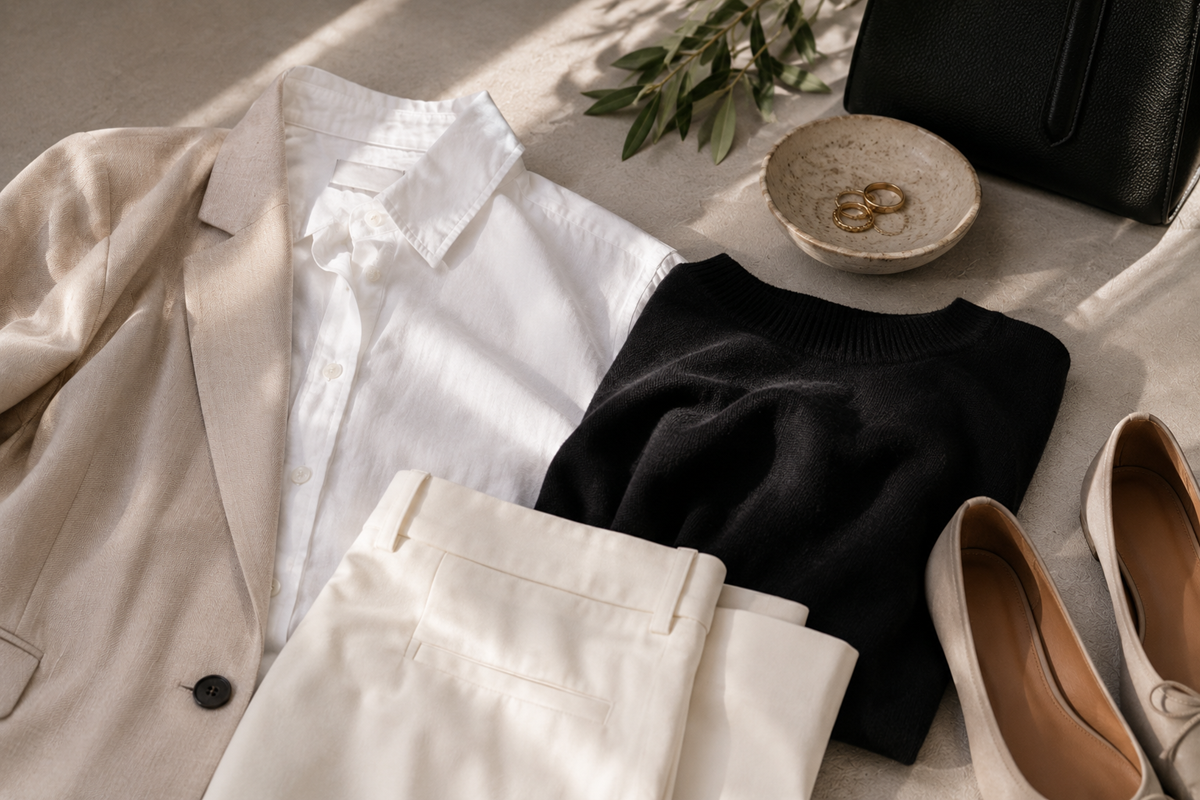
The Power of Refinement: Why Style Is Often About What You Leave Out
Sometimes, while getting dressed, you realise something isn’t quite right
- The clothes work.
- The shoes work.
- The handbag works.
- The jewellery works.
And yet, somehow, the whole thing feels like too much.
So, you remove the necklace, change the statement shoes for something simpler, or perhaps you take off the belt.
Suddenly, everything falls into place.
Nothing new was added, but the outfit became better because something was removed.
This is refinement, and while we often associate refinement with fashion, it is an idea that reaches much further.
We live in a culture that encourages us to improve our lives primarily by adding to them, but perhaps improvement doesn’t always come from addition.
Sometimes the most powerful question we can ask is, “What could I leave out?“
The Elegance of Restraint
Coco Chanel is famously associated with the advice to look in the mirror before leaving the house and remove one thing.
Whether we follow that rule literally isn’t particularly important, but, the principle behind it is.
Restraint creates space.
When every element of an outfit is competing for attention, it can become difficult to see anything at all.
Refinement asks us to decide what matters most, and then allow it room to be seen.
More Doesn’t Automatically Mean Better
This sounds obvious, and yet so much of modern life tells us otherwise.
- If our wardrobe isn’t working, perhaps we need more clothes.
- If our home feels unfinished, perhaps we need more objects.
- If we feel uninspired, perhaps we need another book, another course, another podcast or another source of advice.
- If our lives don’t feel full enough, perhaps we need another commitment.
We become accustomed to solving dissatisfaction through accumulation. But accumulation and improvement are not the same thing. Sometimes adding more simply gives us more to manage.
Refinement offers another possibility. Instead of asking what is missing, we can ask whether there is already enough.
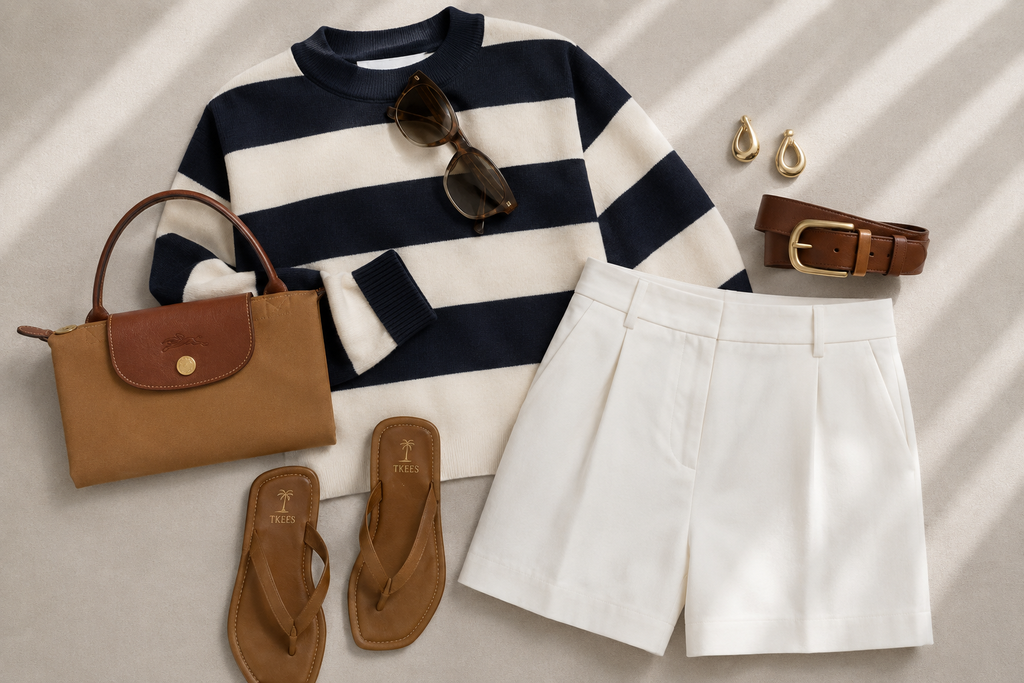
Refinement Isn’t Minimalism
I think this distinction matters.
Refinement does not require becoming a minimalist.
- You don’t need a wardrobe of twenty pieces.
- Your home doesn’t need to be beige and almost empty.
- You don’t need to own one handbag, three books and a single perfectly positioned vase.
Refinement is not about adhering to an arbitrary number; it’s about intention.
The question isn’t necessarily how much is there. The question is whether everything has a reason to be there.
Knowing When an Outfit Is Finished
One of the skills we develop as our personal style becomes clearer is knowing when to stop.
This can be surprisingly difficult.
We have been taught to think about “finishing” an outfit with accessories, but an outfit doesn’t need to include every styling opportunity available to us.
Sometimes the clothes themselves are enough.
- A beautifully cut pair of trousers and a simple shirt may need little more than great shoes.
- A dramatic pair of earrings may be stronger without a necklace.
- A beautiful coat may be the statement.
- A monochromatic outfit may work precisely because nothing interrupts its simplicity.
This doesn’t mean accessories are unnecessary.
Quite the opposite; it means they become choices rather than requirements.
Every addition should contribute something.
Editing Is a Form of Respect
We often think about editing in terms of getting rid of things, but good editing is really about revealing what deserves attention.
An editor removes words so the important ones become stronger.- A curator selects works so each piece can be properly seen.
- A gardener prunes so the plant can flourish.
And, when we edit our wardrobes, we create space for the clothes we actually want to wear.
There is respect in this.
- Respect for the things we have chosen.
- Respect for the money we spent on them.
- Respect for the craftsmanship that went into making them.
- And respect for our own time.
A wardrobe crammed with clothes isn’t necessarily offering us more possibilities; sometimes it is simply making the good things harder to see.
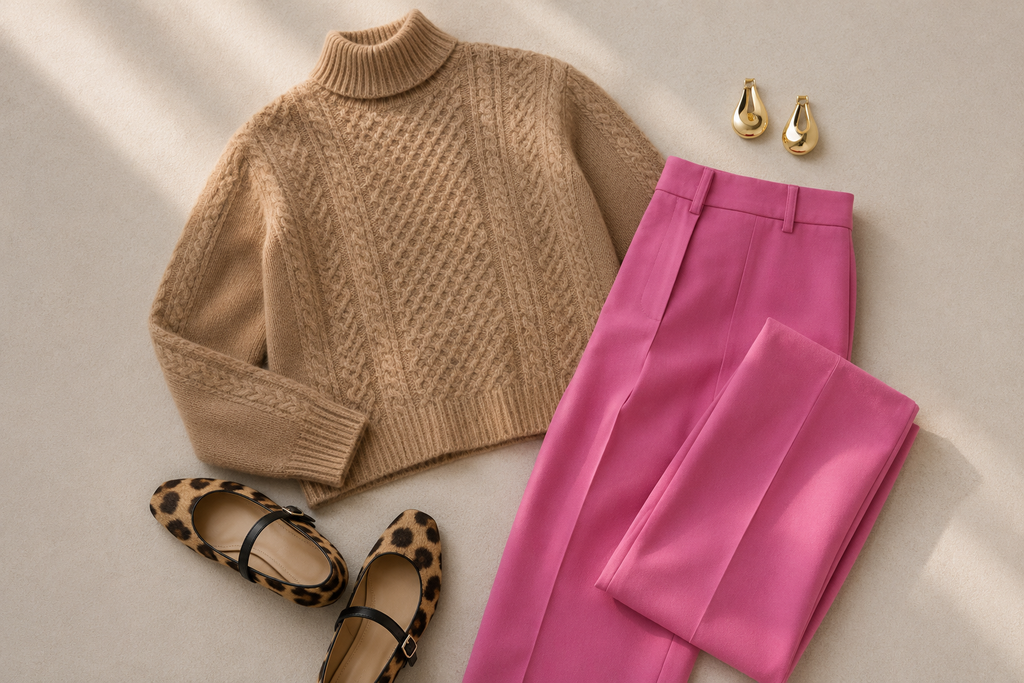
Refinement in the Home
The same principle applies to our surroundings.
Many of us have experienced the strange phenomenon of removing something from a room and immediately preferring the room without it.
Refinement isn’t about creating a home that looks as though nobody lives there.
It is about making space for the things that matter.
The Things We Don’t Choose
In the previous article in this series, Choosing Well, we explored the idea that developing taste means becoming increasingly discerning about what we allow into our lives.
Refinement is the other side of that decision. It isn’t only about what we choose; it is also about what we deliberately leave behind.
What we leave out begins to define our lives just as much as what we include.
Space Has Value
Empty space can make us uncomfortable.
- An empty section of a wardrobe looks as though it needs filling.
- An empty wall looks unfinished.
- A free Saturday feels available for something.
- A pause in conversation feels as though somebody should speak.
We are remarkably quick to fill space, but space has its own value.
Space gives us room to notice, to think, to move, and to appreciate what is already there.
Not every space needs to be filled.
Refining What You Already Have
Refinement also shifts our attention away from the constant pursuit of newness.
Before replacing something, perhaps we can improve what we already own.
- Have trousers altered so they fall beautifully.
- Repair the shoes we love.
- Move a piece of furniture to another room.
- Restyle the clothes already hanging in our wardrobe.
- Frame the photograph that has been sitting in a drawer.
- Use the beautiful serving dish rather than leaving it hidden in a cupboard.
Sometimes what we already own doesn’t need replacing; it needs attention.
This is one of the quieter pleasures of refinement.
We stop constantly searching for the next thing and begin seeing possibility in what is already ours.
Refine, Don’t Perfect
There is, however, a trap here.
Refinement should not become perfectionism.
A refined life is not an immaculate life.
The goal isn’t perfection; it’s awareness.
To occasionally stand back and ask, “Is this adding something, or simply adding more?“
That question can be surprisingly useful.
The Quiet Confidence of Enough
Perhaps refinement is ultimately about recognising enough.
- Enough jewellery.
- Enough furniture.
- Enough clothes.
- Enough commitments.
- Enough noise.
Not because there is something virtuous about deprivation, but because once something is enough, adding more doesn’t necessarily make it better.
Knowing when to stop is its own form of confidence. It means we no longer need abundance to reassure us that something is complete.
We can allow simplicity where simplicity works.
We can allow extravagance where extravagance brings joy.
And we can recognise the difference.
Refinement is not about stripping life back until very little remains. It is about removing what distracts from what matters.
So, the next time something feels slightly off – an outfit, a room, a wardrobe or perhaps even your calendar – resist the instinct to immediately add something.
Look again. There may not be anything missing; there may simply be something you no longer need.
Elegance isn’t created by adding until nothing more will fit. It is created by refining until nothing unnecessary remains.
Self Image Style