

Intentional Living: How the Choices We Make Shape Our Lives
There is a life we imagine we will have one day.
When we have more time, more money, when work becomes less demanding, or when we finally feel organised.
And then there is the life we are actually living.
- The ordinary Tuesday morning.
- The clothes we reach for.
- The things we bring into our homes.
- The people we spend our time with.
- The books beside the bed.
- The food we eat.
- The places we go.
- The way we speak to ourselves when nobody else is listening.
This is our life.
Not the future version. This one.
And perhaps this is where intentional living begins; with the recognition that the life we want is not something we eventually arrive at. It is something we create through the choices we make every day.
It is something we choose.
A Life Is Made of Choices
We tend to think of the important choices in life as the big ones.
- Where we live.
- The work we do.
- Who we love.
- Whether we stay or leave.
- What we pursue.
And of course, these choices matter.
But much of life is shaped by decisions that seem almost insignificant at the time.
- What we buy because it is on sale.
- What we keep because we feel guilty getting rid of it.
- What we agree to because saying no feels uncomfortable.
- What we wear because we have always worn it.
- What we consume because everyone else seems to be consuming it.
- What we postpone because someday feels easier than today.
Individually, these decisions may mean very little, but collectively, they become a life.
Intentional living is simply becoming more conscious of them.
Choosing Rather Than Accumulating
We live in a culture that continually encourages us to add.
- Another dress.
- Another skincare product.
- Another decorative object.
- Another subscription.
- Another goal.
- Another thing we apparently need before we can become the person we want to be.
But a beautiful life is not necessarily created by accumulation. Sometimes it is created through subtraction.
- Fewer things, chosen more carefully.
- Fewer obligations that leave us depleted.
- Fewer purchases made from boredom, insecurity or comparison.
- Fewer possessions we maintain simply because we once spent money on them.
- Fewer ideas about who we are supposed to be.
There is a quiet confidence in being able to say, “This is enough.”
Not because we have given up wanting beautiful things or interesting experiences.
Quite the opposite.
When we stop trying to have everything, we become much better at recognising what is genuinely worth having.
What We Choose to Bring Home
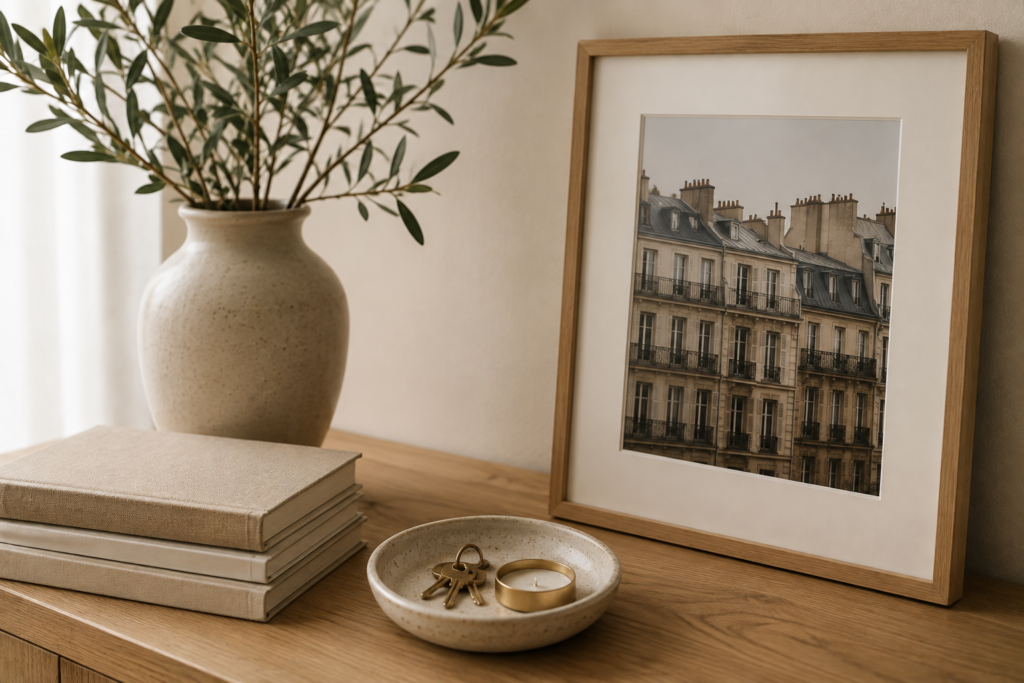
Our homes tell stories about us.
So do our wardrobes.
The objects we surround ourselves with are not meaningless. They are evidence of thousands of choices made over many years.
Some things are practical, some are beautiful, and some remind us of people and places we love. And, some are simply there because we never consciously decided whether they should remain.
Intentional living asks a different question from minimalism.
Not simply, “Can I get rid of this?”
But, “Does this deserve a place in my life?”
The goal is not to own as little as possible.
The goal is to become more discerning about what we allow to stay.
Style Is Part of the Same Conversation
This is why personal style and intentional living belong together.
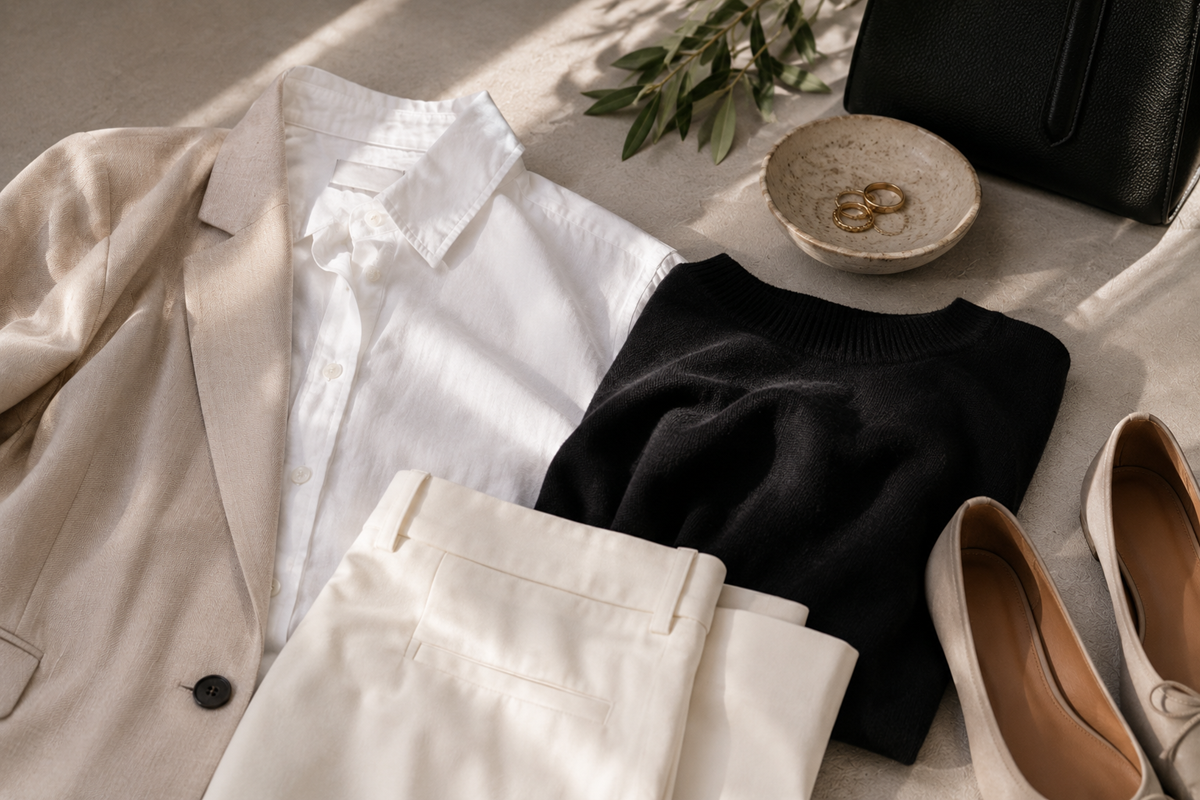
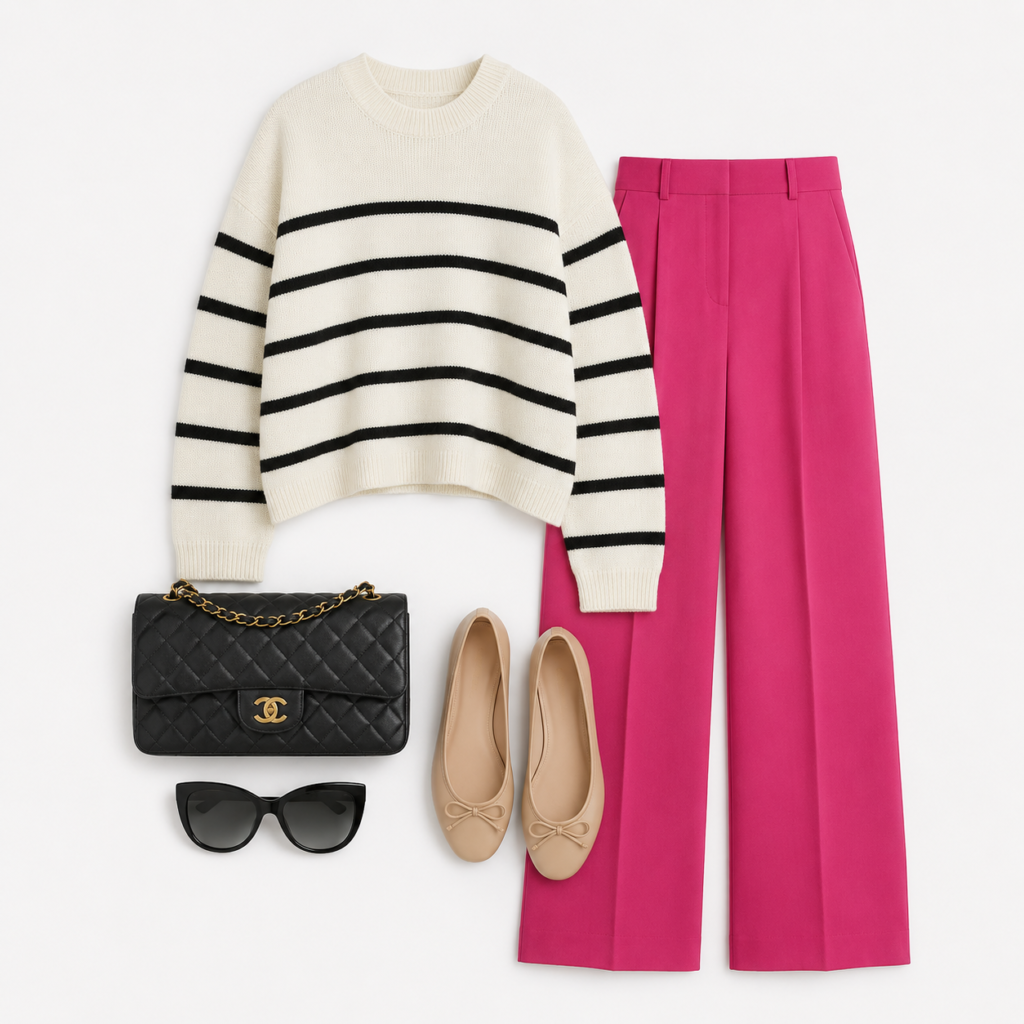
Getting dressed is one of the choices we make every day. When we understand ourselves, we begin to need less external instruction about what to wear.
- We stop chasing every trend.
- We stop buying clothes for imaginary versions of our lives.
- We become less interested in what everyone else has decided is essential.
Instead, we choose clothes that reflect who we are and how we actually live.
A wardrobe built this way becomes quieter, more coherent, more personal, and usually, smaller.
Not because having fewer clothes is inherently virtuous, but because clarity removes much of the need for excess.
Attention Is a Choice Too
Perhaps the most valuable thing we curate is not our wardrobe or our home.
It is our attention, and the everyday things compete for it.
- News.
- Notifications.
- Advertising.
- Social media.
- Other people’s opinions.
- Other people’s lives.
- Other people’s urgency.
It is very easy to spend an entire day responding to what the world places in front of us and very little time deciding what actually deserves our attention.
Intentional living means recognising that attention is finite, and where we place it matters.
- A conversation without looking at our phone.
- An afternoon at a gallery.
- Reading a book slowly.
- Cooking something properly.
- Walking through a garden.
- Listening to music without doing three other things at the same time.
These moments can look insignificant from the outside, but they are not the spaces between our lives.
They are our lives.
Beauty Does Not Have to Be Earned
We often reserve beautiful things for special occasions.
- The good china.
- The expensive perfume.
- The dress we love.
- The restaurant we have been meaning to visit.
- The flowers we think are unnecessary.
- The trip we keep talking about taking.
There is wisdom in anticipation, but there is also wisdom in understanding that life does not need to become extraordinary before we are allowed to enjoy it.
Intentional living is not about turning every day into an occasion. It is about noticing that ordinary days are worthy of care too.
- Wear the beautiful coat.
- Light the candle.
- Use the good glass.
- Put flowers on the table.
- Go to the exhibition.
- Take yourself somewhere interesting.
Not recklessly. Not constantly. Deliberately.
A beautiful life does not require extravagance. It requires participation.
Becoming More Selective
There is another side to intentional living that is less romantic.
It requires saying no.
- No to things we once would have bought.
- No to invitations we don’t want to accept.
- No to trends that don’t belong to us.
- No to clutter disguised as opportunity.
- No to relationships that exist entirely through obligation.
- No to the pressure to keep up.
And sometimes, no to an earlier version of ourselves.
This can feel uncomfortable. But, discernment inevitably involves exclusion.
If everything is important, nothing is. If everything belongs, nothing has been curated.
Choosing one thing often means choosing not to have another.
That is not deprivation; that is what makes a choice meaningful.
The Life We Already Have
Perhaps the greatest mistake we make is believing intentional living requires starting again.
- A different home.
- A different wardrobe.
- A different career.
- A different body.
- A different life.
Usually, it doesn’t. It begins much closer to home, with what we already have.
What if, instead of constantly asking what we need next, we occasionally asked, “What have I already chosen that deserves more of my attention?”
- The clothes we love but rarely wear.
- The books we bought but haven’t read.
- The neighbourhood we barely explore.
- The people we keep meaning to call.
- The room we could make beautiful without buying anything.
- The interests we abandoned because life became busy.
There may already be far more richness in our lives than we realise.
We have simply stopped seeing it.
Choosing Again
Intentional living is not about creating a perfectly curated existence. That would simply become another impossible standard.
- We will still buy things we regret.
- Waste afternoons.
- Keep things too long.
- Say yes when we wanted to say no.
- Change our minds.
- Outgrow things we once loved.
That is part of being human.
Living intentionally simply gives us permission to choose again.
To look at our wardrobes, homes, calendars, habits and ambitions and ask whether they still reflect the person we are becoming.
And if they don’t, we can change them. Quietly. Gradually. One choice at a time.
In the end, a beautiful life is rarely created through one dramatic transformation. It is created through ordinary decisions made with greater awareness.
- What we wear.
- What we buy.
- What we keep.
- What we release.
- Where we go.
- Who we spend our time with.
- What we notice.
- What we value.
- And what we decide is enough.
That is the quiet work of intentional living.
Not waiting for the life we want.
Choosing it.
Reflection
Look around at the life you already have.
Your wardrobe. Your home. Your calendar. Your habits. The things you own and the things that occupy your attention.
Ask yourself,
- “What have I chosen deliberately — and what have I simply accumulated?”
- “What deserves more of my time, attention and care?”
- “What am I ready to stop carrying?”
And perhaps most importantly, “If my everyday choices were creating the next chapter of my life, what would I choose differently?”
Start where you are. Use what you have. Do what you can.
Arthur Ashe