

Musée du Louvre: General Exhibition
There are museums you visit to see a particular exhibition, and then there are places where the building, the history and the collection become part of the experience itself.
The Musée du Louvre is very much the latter.
Vast, beautiful and almost impossible to comprehend in a single visit, the Louvre contains centuries of art, architecture, craftsmanship and history beneath one roof. It is a place where you can stand before one of the world’s most recognisable works of art, turn a corner, and find yourself completely captivated by something you had never intended to see.
Perhaps that is part of its magic.
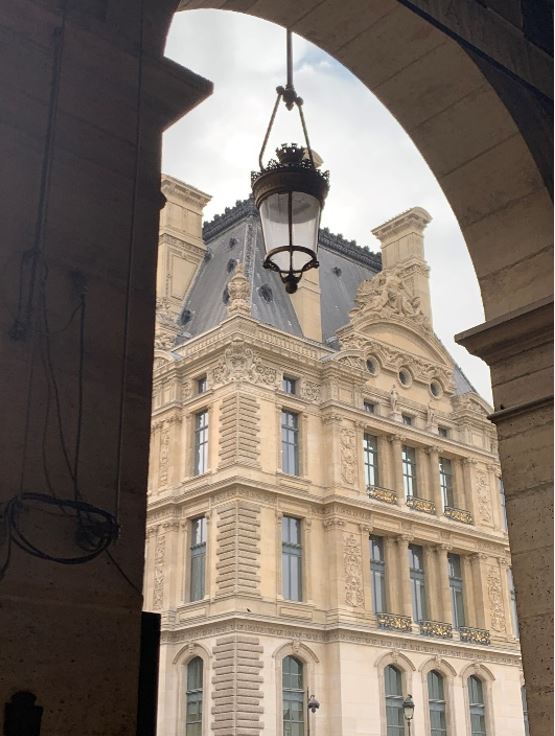
Why I Went
A visit to Paris would hardly feel complete without spending time at the Louvre.
Of course, there are the works we all know long before we ever see them in person, the Mona Lisa, the Venus de Milo and the Winged Victory of Samothrace among them. But I have always found that the most memorable moments in galleries are not necessarily the ones we plan.
They are the rooms we wander into unexpectedly. The detail that makes us stop. The work we had never heard of but cannot quite walk away from.
For me, two areas in particular stayed with me long after my visit, the Napoleon III Apartments, and the Michelangelo Gallery.
Neither was simply about seeing famous objects. They were about atmosphere, craftsmanship, scale and the extraordinary things human beings are capable of creating.
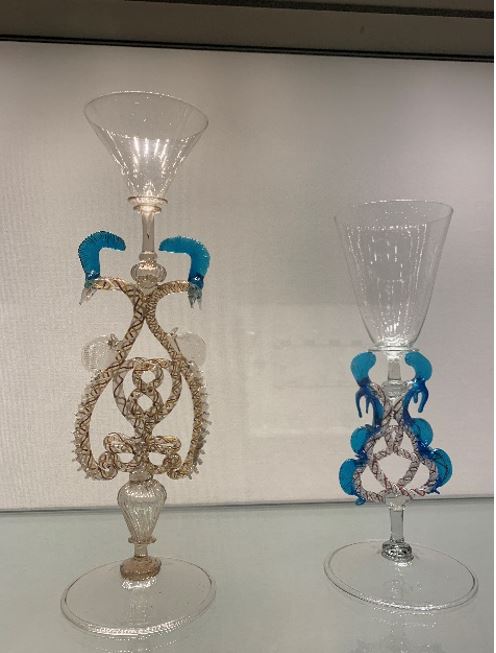
About the Museum
Before it became one of the world’s great museums, the Louvre was a palace.
Its history stretches back to the late 12th century, when a fortress was built on the site under King Philippe Auguste. Over the centuries, it was transformed, expanded and rebuilt by successive French rulers before eventually becoming a museum during the French Revolution.
Today, its collections span thousands of years and encompass painting, sculpture, decorative arts, antiquities, prints and drawings from civilisations across the world.
That history is part of what makes the Louvre so extraordinary.
You are not simply walking through rooms filled with art. You are walking through layers of French history; from medieval foundations to Renaissance galleries and the grandeur of the Second Empire.
The museum itself is one of the masterpieces
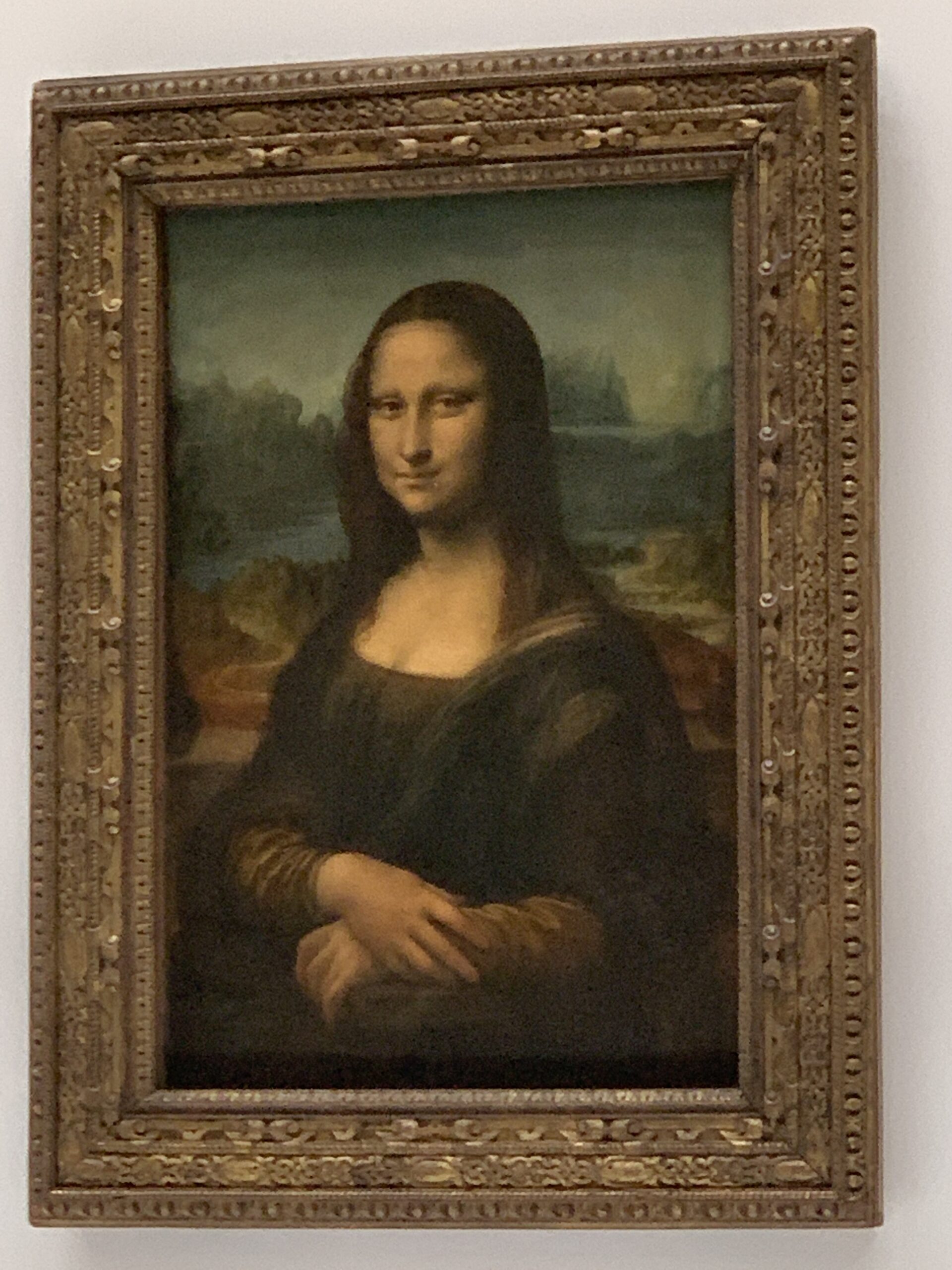
Highlights
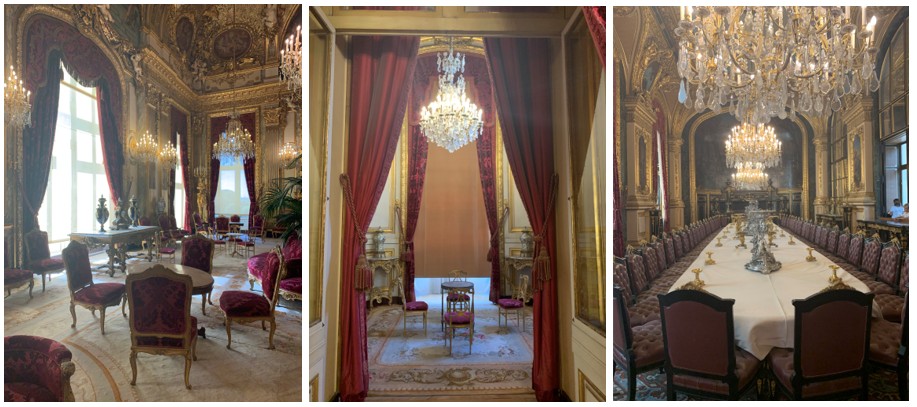
The Napoleon III Apartments
Of everything I saw at the Louvre, the Napoleon III Apartments were among the greatest surprises.
Located in the Richelieu Wing, the apartments offer a glimpse into the extraordinary opulence of France’s Second Empire.
Created during the reign of Napoleon III, these rooms were originally part of the apartments of the Minister of State. Much of the historic interior has survived, allowing us to experience something remarkably close to the environment that existed here in the 19th century.
And it is spectacular.
Gold detailing, deep red furnishings, enormous chandeliers, painted ceilings, gilded mouldings and richly decorated rooms create an almost overwhelming sense of abundance.
There is very little restraint here. And perhaps that is precisely why it works.
The rooms were designed to impress. They speak of ceremony, entertaining, status and the importance of creating an environment that communicated power before a word was spoken.
The Grand Salon is particularly memorable; theatrical, extravagant and unapologetically decorative. The Louvre notes that the room could even be transformed into a theatre for hundreds of guests.
Seeing these rooms is a reminder that interiors have always communicated something about the people who inhabit them.
Our surroundings tell stories about us too.
Perhaps on a much smaller scale, the homes we create, the objects we display and the things we choose to keep all become part of our own visual language.
The Michelangelo Gallery
The Michelangelo Gallery offered an entirely different experience.
Where the Napoleon III Apartments are about richness and decoration, the Michelangelo Gallery feels almost distilled by comparison: stone, form, movement and the human body.
Named after Michelangelo, the gallery contains Italian sculpture spanning several centuries and was itself created during the Second Empire, between 1854 and 1857.
Michelangelo’s Dying Slave and Rebellious Slave are among its most significant works.
There is something extraordinary about seeing sculpture like this in person.
A photograph allows us to see a sculpture from one perspective. Standing beside it allows us to understand its physical presence — its scale, texture, weight and movement.
Michelangelo’s figures seem simultaneously trapped within the marble and emerging from it. The unfinished elements make the process of creation visible, as though we are seeing the transition between raw material and finished form.
The Louvre describes the two figures as combining realism and idealism, with one appearing to surrender and the other straining against his restraints.
That contrast – resistance and surrender, strength and vulnerability – gives the works an emotional quality that extends far beyond their physical beauty.
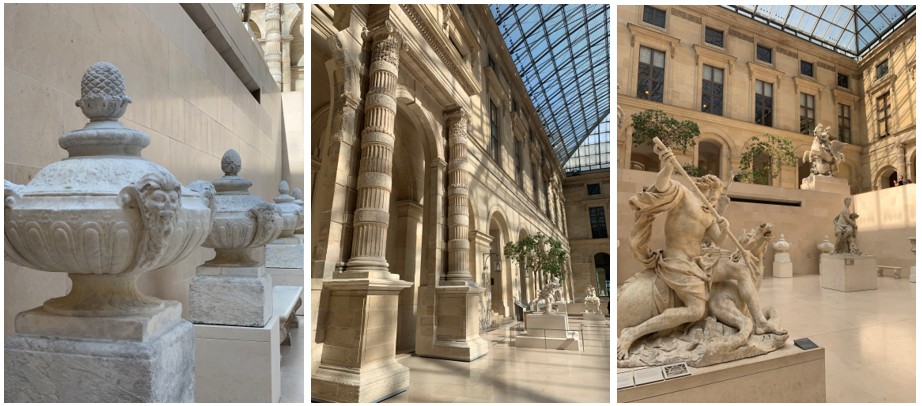
The Unexpected Moments
The Louvre is filled with masterpieces, but one of the pleasures of visiting is allowing yourself to wander.
It is simply too large to see everything, and I don’t think we need to try.
There is something wonderful about abandoning the idea that we must experience a museum “properly” and instead allowing ourselves to notice what draws us in.
- A painting.
- A sculpture.
- A beautiful doorway.
- A ceiling.
- A piece of furniture.
- A quiet gallery away from the crowds.
The things that stay with us are not always the things a guidebook tells us are important.
They are the things that speak to us.
Lessons in Style
The Louvre is a reminder that style does not belong to one particular aesthetic.
The Napoleon III Apartments are the very opposite of minimalism. They are extravagant, richly layered and unapologetically decorative; gilding, velvet, chandeliers, ornate furniture and extraordinary craftsmanship filling almost every surface.
And yet, nothing feels accidental. There is a confidence in that abundance. Every detail contributes to the whole.
The Michelangelo Gallery offers an entirely different lesson. Here, beauty comes through form, proportion, movement and the material itself. There is far less decoration to distract the eye. Instead, we notice the curve of a body, the fall of fabric carved from stone, the tension of a muscle and the remarkable transformation of marble into something that appears almost alive.
Two very different expressions of beauty. Both extraordinary.
Perhaps that is the real lesson in style.
Style isn’t about following a particular formula or subscribing to someone else’s idea of what is elegant. It is about understanding what you are drawn to, recognising what feels authentic to you and making choices with intention.
It is also about learning to look more closely.
- At craftsmanship.
- At proportion.
- At texture.
- At detail.
- At the relationship between one beautiful thing and another.
We can apply the same discernment to the way we dress, the objects we bring into our homes and the things we choose to buy and keep.
The Louvre contains an almost unimaginable amount of beauty, yet we don’t need to love all of it.
Some rooms we walk through.
Others make us stop.
And perhaps personal style develops in much the same way; not by learning to appreciate everything, but by paying attention to the things that make us pause.
Over time, those choices begin to reveal a pattern.
And that pattern becomes our style.
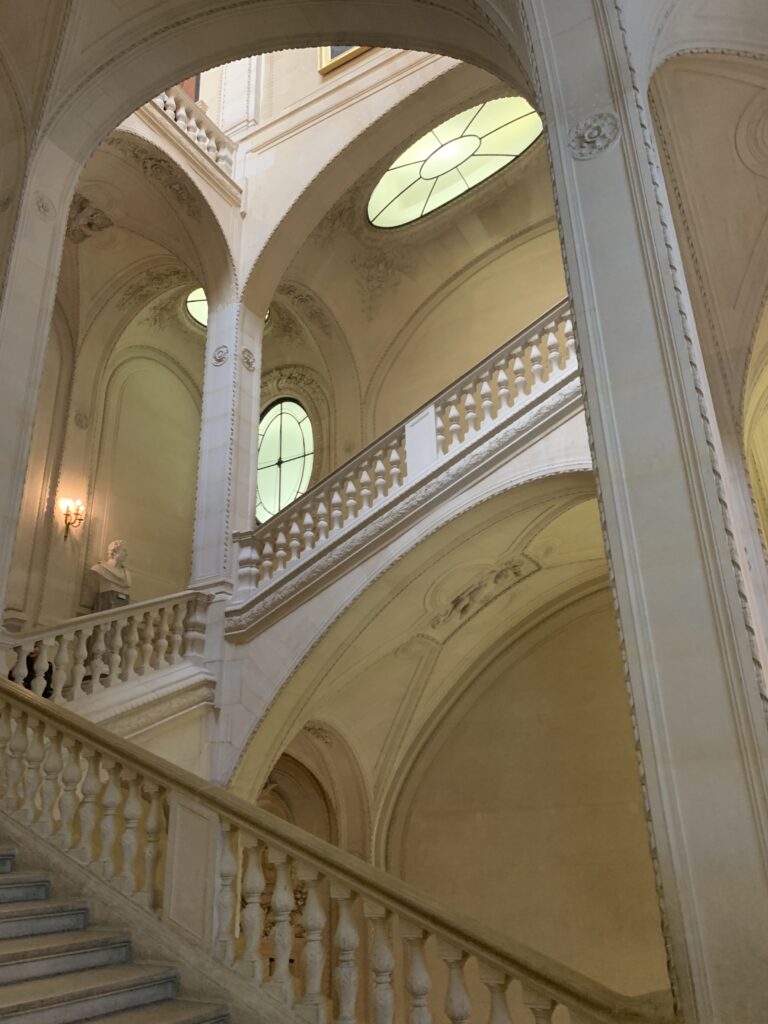
I saw the angel in the marble and carved until I set him free.
Michelangelo