
Intentional Shopping: Before You Shop, Look Inward
Most shopping begins with looking.
- We look at what is new.
- What other women are wearing.
- What is appearing in stores.
- What the algorithms are showing us.
- What colours are supposedly fashionable this season.
- What someone on Instagram has just bought.
And almost immediately, we begin asking ourselves, “Do I want that too?”
But, perhaps we are beginning in entirely the wrong place. Before we look outward, there is something much more important to consider.
Ourselves.
The first step towards becoming a more intentional shopper isn’t deciding what to buy; it’s understanding the person you are buying for.
We Change More Than We Realise
Life moves quickly.
Careers change. Bodies change. Relationships change. Priorities change. Our financial circumstances change. The way we spend our days changes.
And somewhere amongst all of that, we change too.
Yet our wardrobes do not always change with us. Sometimes they become archives of previous versions of ourselves.
- The corporate wardrobe from a career we no longer have.
- The clothes bought for a body we once had — or hoped to have.
- The dresses belonging to a social life that has changed.
- The impulse purchases from a phase when shopping itself provided entertainment.
- The pieces bought because somebody else looked wonderful wearing them.
None of these things necessarily represents who we are today.
And unless we periodically stop to reconsider who we have become, it is remarkably easy to continue shopping for a woman who no longer exists.
Before the Wardrobe Edit Comes the Life Edit
When we think about improving our wardrobes, we usually begin with the wardrobe itself.
- “What should stay?“
- “What should go?“
- “What is missing?“
- “What should I buy?“
Useful questions, but I think there is an earlier conversation to have, “What does my life look like now?“
Consider how you actually spend your time.
- Perhaps your career has become more senior and you want your professional presence to evolve with it.
- Perhaps you work from home several days each week and no longer need the wardrobe you once did.
- Perhaps you are travelling more.
- Going out less.
- Going out more.
- Entering retirement.
- Beginning a new career.
- Becoming more interested in art, travel, culture, health or simply having more time for yourself.
Your wardrobe should support your life. Not the life you used to have. And certainly not somebody else’s.
Know Your Why
Before buying something new, ask why you want it.
This sounds ridiculously simple, but it isn’t.
Our reasons for buying are often more complicated than we realise.
Sometimes we genuinely need something, recognise extraordinary quality or craftsmanship or sometimes, an object is beautiful and useful and will bring pleasure to our lives for years.
But sometimes we buy because we are bored, we’ve had a difficult day, it’s discounted, or because someone we admire owns it.
Understanding your why creates a small but incredibly useful space between wanting and buying.
And sometimes that space is enough to make us realise, “I don’t actually want this.“
Know Where You Are Going
There is another dimension to intentional dressing that receives surprisingly little attention.
Where are you going?
Not geographically, but personally, professionally and creatively.
What are you building?
There is a significant difference between shopping for the person you wish you could magically become, and dressing in a way that supports the person you are actively becoming.
One is fantasy.
The other is alignment.
Know What You Want From Your Wardrobe
Most of us know what we don’t like about our wardrobes.
- “I have nothing to wear.“
- “Nothing goes together.“
- “I have too many clothes.“
- “Everything feels the same.“
- “My wardrobe feels boring.“
- “I keep buying things and still feel like something is missing.“
Fewer of us stop to define what we actually want our wardrobes to do.
- Perhaps you want fewer clothes and more outfits.
- Perhaps you want getting dressed to feel effortless.
- Perhaps you want better quality.
- Perhaps you want to introduce more colour.
- Perhaps you want a wardrobe that works across several areas of your life.
- Perhaps you want to stop buying things that never leave the hanger.
Know Your Values
Personal branding can sound rather corporate, but stripped of the jargon it asks a useful question, “What do you want your presence to communicate?“
Not what do you want people to think you own, but what do you want them to understand about you?
- Perhaps you value creativity.
- Warmth.
- Intelligence.
- Individuality.
- Elegance.
- Simplicity.
- Authority.
- Approachability.
- Quality.
- Sustainability.
These qualities do not require particular brands, labels or price points, but understanding them can help explain why certain clothes feel completely natural on you while others feel like costumes.
Our style is often most convincing when there is consistency between who we are, what we value and how we present ourselves.
Know the Woman in the Mirror
Then there is the practical part.
Look at yourself as you are today. Not critically, but accurately.
- What colours make you come alive?
- What proportions work beautifully on your body?
- What shapes make you feel comfortable?
- What fabrics do you enjoy wearing?
- What silhouettes do you repeatedly reach for?
- What do you avoid?
- What are you naturally drawn to?
Look beyond clothing.
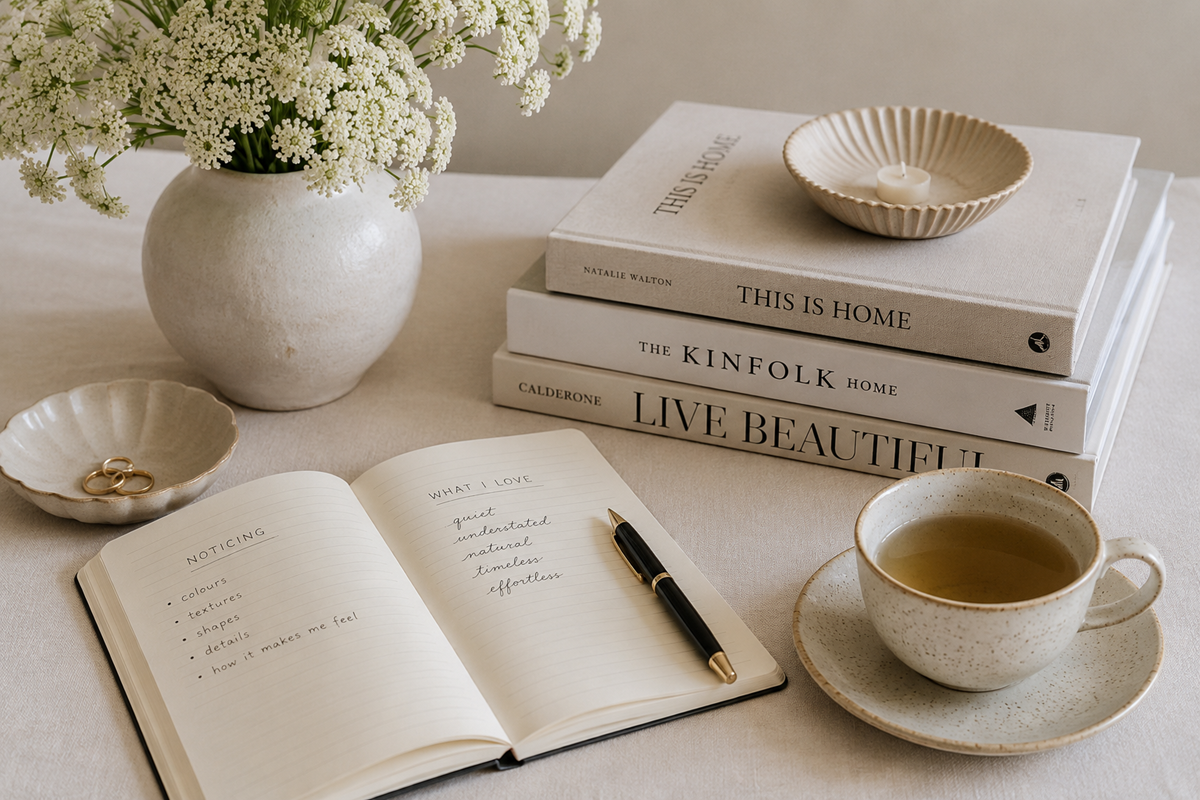
- Notice interiors you save.
- Hotels you love.
- Architecture.
- Art.
- Books.
- Gardens.
- Restaurants.
- Films.
- Cities.
- Objects.
- Colours.
- Textures.
There are clues everywhere.
Personal style doesn’t need to be invented from scratch. Very often, it needs to be noticed.
Your Current Image
Finally, consider how you are presenting yourself today.
This isn’t an invitation to find faults; it’s an invitation to notice.
- Does the way you currently dress feel like you?
- Does it reflect your life?
- Your values?
- Your ambitions?
- Does your wardrobe make getting dressed easier or more difficult?
- Is there a gap between how you see yourself internally and what you see in the mirror?
That gap is interesting, because it gives you somewhere to begin.
Shopping Comes Later
Only after all of this would I begin thinking seriously about what to buy.
This turns the conventional shopping process upside down.
Instead of: See → Want → Buy → Find somewhere to wear it
Begin with: Reflect → Understand → Identify → Choose
The difference is enormous.
One fills wardrobes, and the other builds them.
Perhaps that is the distinction at the heart of intentional shopping.
We don’t need to become better at finding things to buy, we need to become better at recognising what deserves a place in our lives.
That begins long before we enter a store.
It begins with knowing ourselves.
Reflection
Before you next buy something for your wardrobe, spend a little time thinking about the woman you are shopping for.
Ask yourself
My Why
Why do I buy clothes? What emotions, habits or circumstances tend to trigger unnecessary purchases?
My Life
How do I actually spend my time now?
My Goals
Where am I going personally and professionally?
My Wardrobe
What do I want my wardrobe to make easier?
My Values
What qualities matter to me, and do I want those qualities reflected in the way I present myself?
My Image
Does the woman I see in the mirror feel aligned with the woman I know myself to be?
My Style
What colours, shapes, textures and aesthetics am I repeatedly drawn towards?
You don’t need to have perfect answers; you simply need to begin paying attention.
Perhaps the most powerful shopping tool you will ever have isn’t a wardrobe checklist, a shopping list or a carefully curated Pinterest board.
It is self-awareness.
Before you shop, look inward.
The most important thing to understand before you decide what to buy is yourself.
Self Image Style
You Might Also Like
The Art of Mixing Neutrals and Colours
Style Formulas: The Secret Stylish Women Know