
The Art of Mixing Neutrals and Colours
One of the simplest ways to elevate your wardrobe is learning how to combine neutrals with colour.
Many women fall into one of two camps,
- They either wear almost exclusively black, navy, beige and white because they feel safe.
- They love colour so much that every piece competes for attention.
The most elegant wardrobes usually sit somewhere in between.
Neutrals are used to create calm, and colours to create personality.
When you understand how the two work together, getting dressed becomes easier, your wardrobe becomes more versatile, and your outfits feel intentional rather than accidental.
Why Neutrals Matter
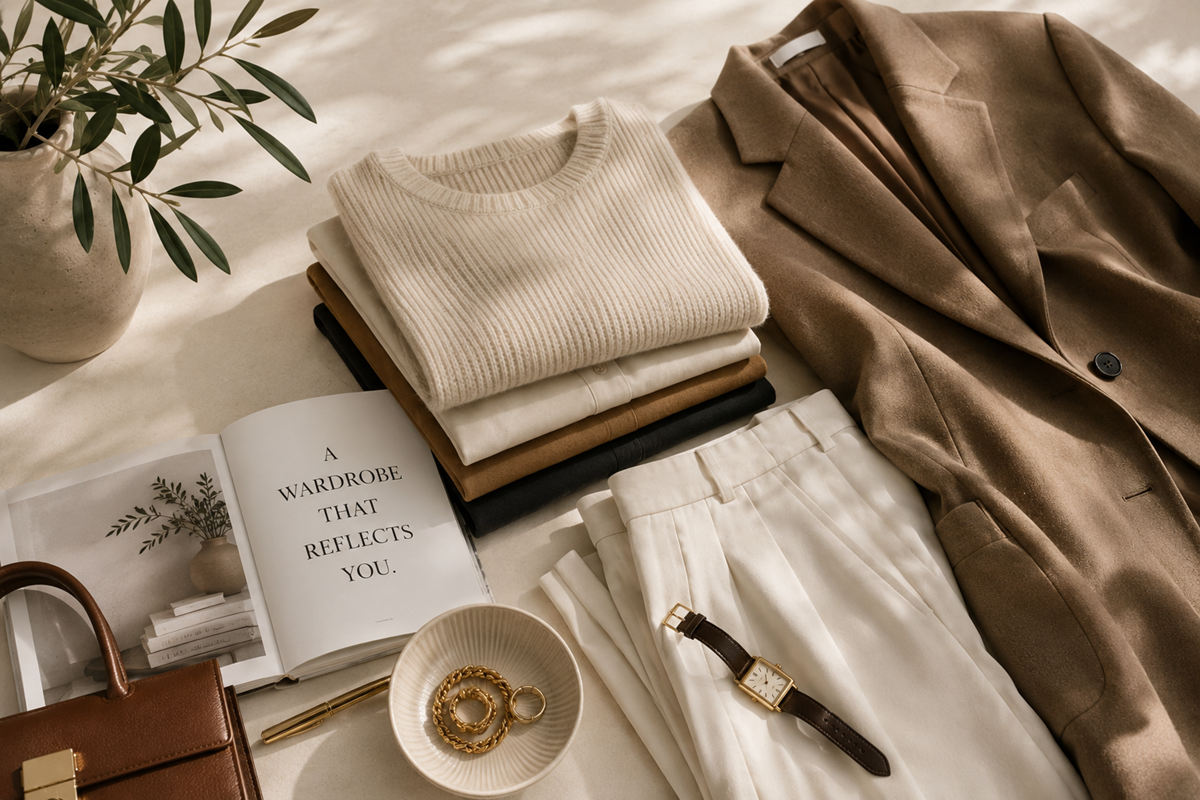
Neutrals are the foundation of a wardrobe, and allow every other piece to shine. They create cohesion throughout your closet.
Think of them as the architecture of an outfit.
Beautiful neutrals include,
- Navy
- White
- Cream
- Camel
- Chocolate Brown
- Taupe
- Grey
- Olive
- Black
Although black is traditionally considered a neutral, it isn’t always the most flattering choice for everyone. Many people discover that navy, chocolate or charcoal create a softer, more sophisticated look.
The more your wardrobe is built around versatile neutrals, the easier it becomes to mix and match.
Adding Colour
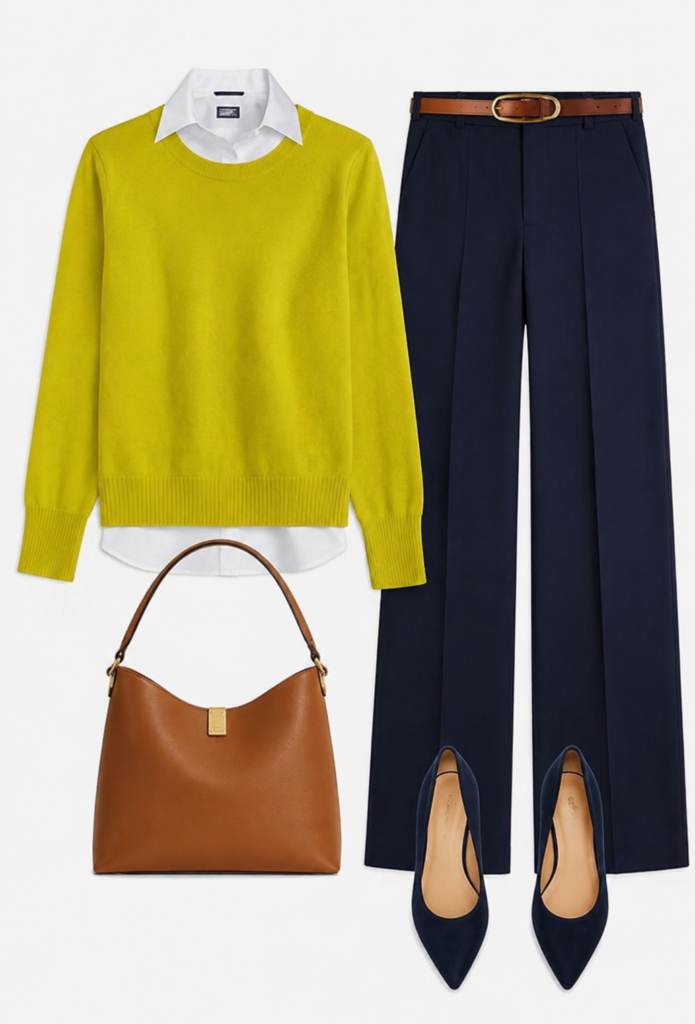
If neutrals create the foundation, colour creates the emotion.
Colour communicates energy, personality and confidence.
- Burgundy feels refined.
- Forest green feels grounded.
- Cobalt blue feels confident.
- Soft blush feels feminine.
- Mustard feels creative.
The goal isn’t to wear more colour; it’s to wear the right colour.
When colours suit your natural colouring, and reflect your personality, they feel effortless rather than overwhelming.
The best colours will match your hair, eyes, skin, and the colour of veins on the inside of your wrist.
The 80/20 Approach
If you’re unsure where to begin, keep most of your outfit neutral.
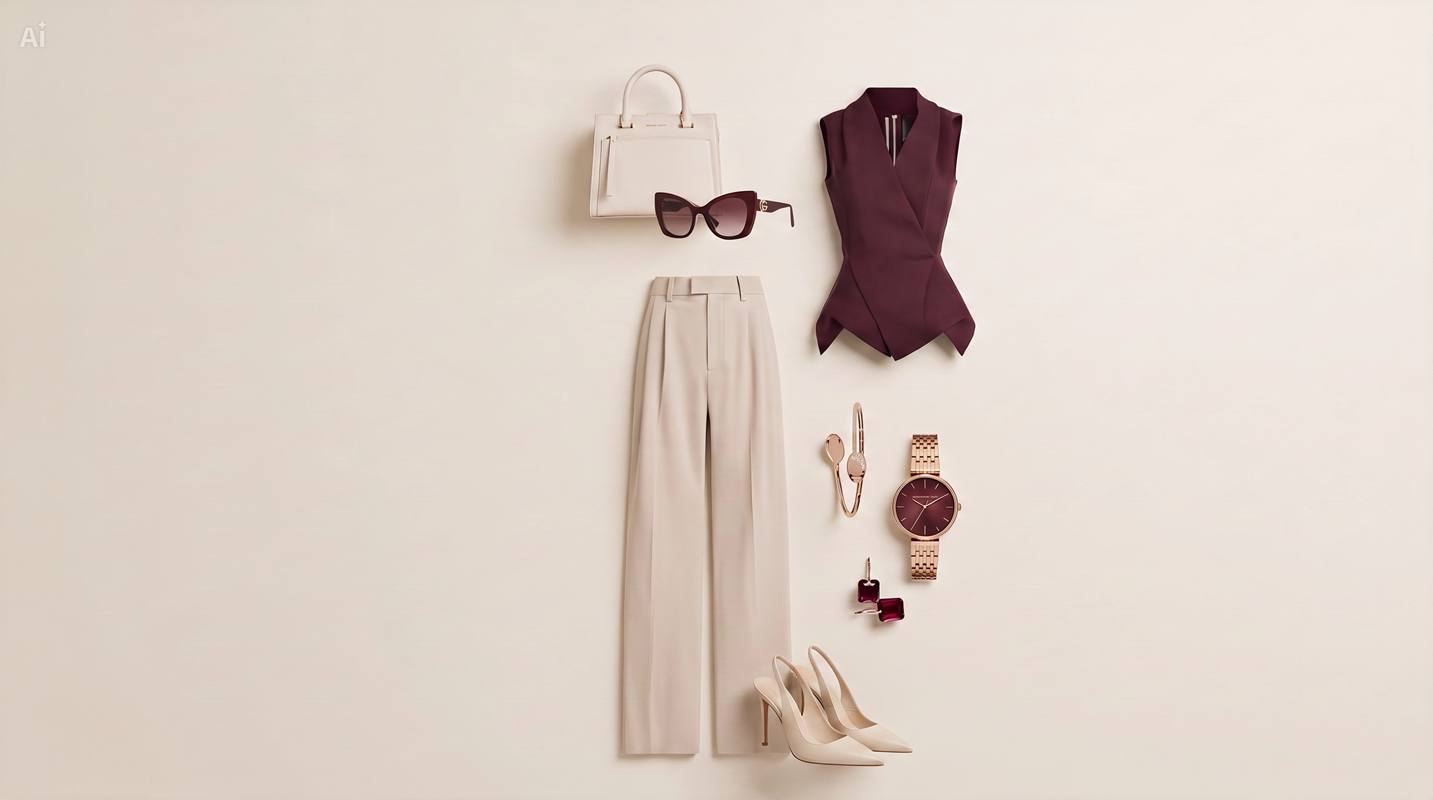
A simple formula is: 80% neutral + 20% colour
For example,
- Camel trousers + white shirt + burgundy knit
- Navy trousers + cream blouse + emerald earrings
- Chocolate blazer + ivory top + teal handbag
- White jeans + denim shirt + coral scarf
The neutral pieces provide balance while the colour becomes the focal point.
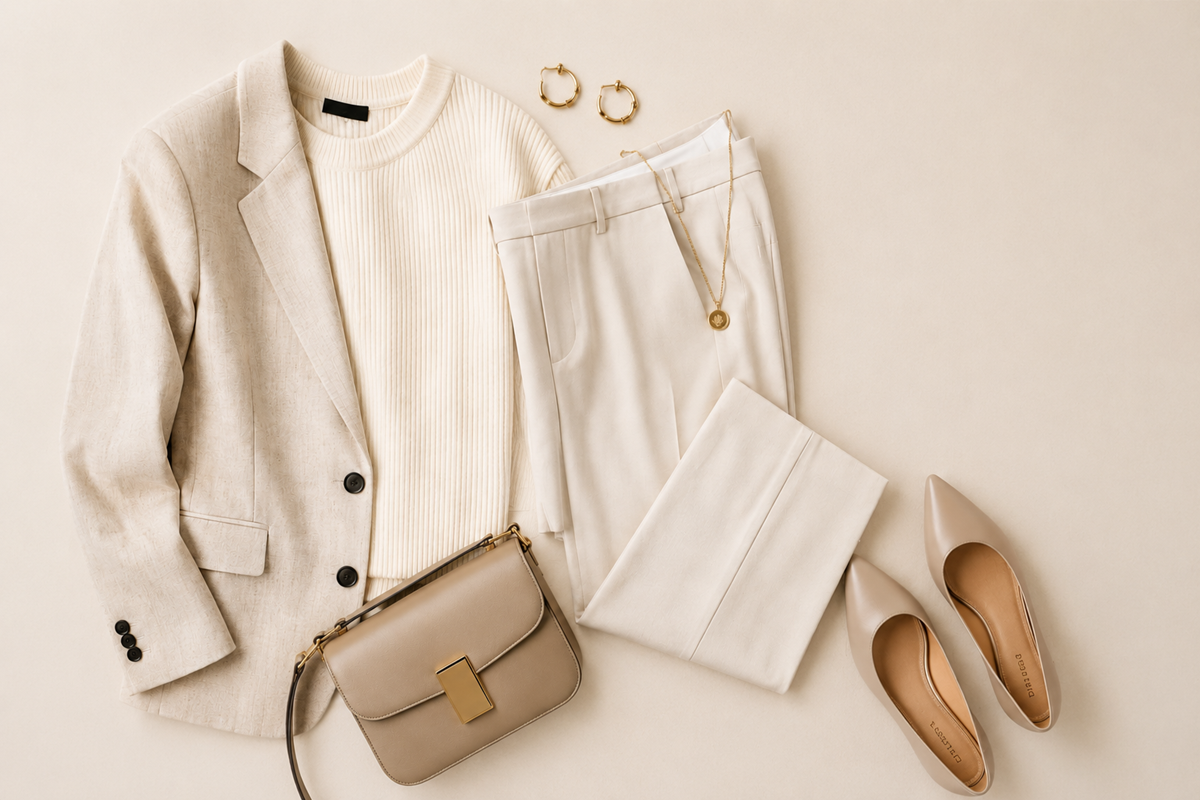
This is one reason quiet luxury wardrobes often feel so polished. Nothing competes for attention, and everything works together.
Choose Colours That Work With Your Neutrals
Not every colour works equally well with every neutral.
Some of the most timeless combinations include,
Navy
Navy pairs beautifully with,
- White
- Burgundy
- Emerald
- Camel
- Soft pink (muted for warm skin tones, and clear for cool skin tones)
- Light blue (muted for warm skin tones, and clear for cool skin tones)
- Olive
Camel
Camel complements,
- Ivory (for warm skin tones)
- White (for cool skin tones)
- Navy
- Burgundy
- Forest green
- Denim
- Chocolate
Chocolate Brown
Chocolate looks luxurious with,
- Cream
- Dusty blue (muted for warm skin tones, and clear for cool skin tones)
- Sage
- Olive
- Soft pink (muted for warm skin tones, and clear for cool skin tones)
- Gold accessories
Grey
Grey works well alongside,
- Burgundy
- Blush
- Cobalt
- Lavender
- White
- Charcoal
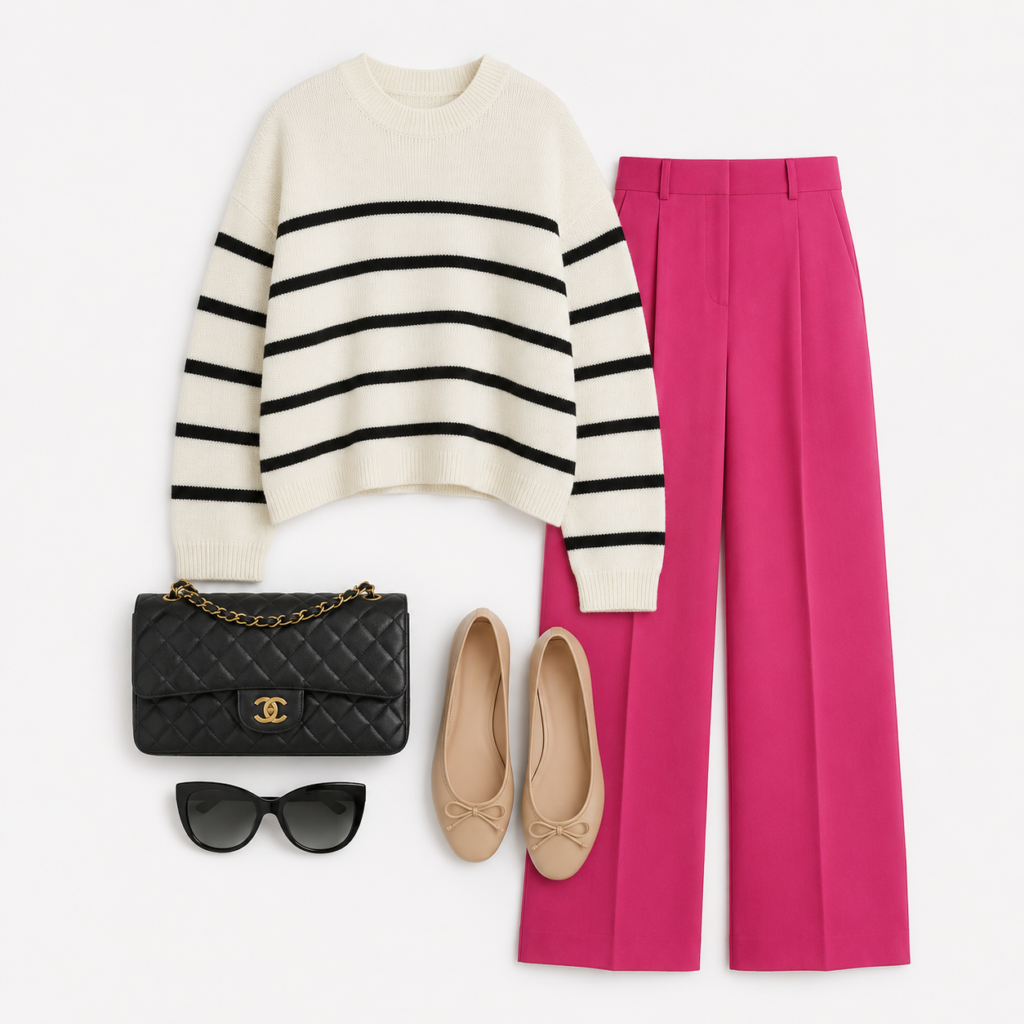
Once you discover combinations you love, they become effortless outfit formulas that you can rely on over again.
Think in Colour Temperature
One reason outfits sometimes feel “off” is because the colours are fighting each other.
Warm colours generally work beautifully together.
Examples include,
- Camel
- Cream
- Rust
- Olive
- Mustard
- Chocolate
- Warm greens
Cool colours often harmonise naturally.
Examples include,
- Navy
- Charcoal
- Crisp white
- Sapphire
- Cool pink
- Lavender
- Blue-based reds
If your wardrobe contains mostly warm colours, introducing an icy cool shade may feel disconnected.
Likewise, a cool wardrobe can lose harmony when paired with overly warm tones.
Understanding your personal colour palette makes these decisions much easier.
One Colour Is Often Enough
One of the biggest mistakes people make is believing an outfit needs multiple statement colours.
Usually, it doesn’t.
One beautiful colour surrounded by elegant neutrals often creates far more impact than several competing shades,
- A camel outfit with one burgundy handbag.
- A navy outfit with emerald earrings.
- A cream dress with chocolate accessories.
Simple combinations often feel the most sophisticated because they allow the eye to rest.
Don’t Forget Texture
Colour isn’t the only way to create interest.
Texture makes neutrals feel rich and luxurious.
Think about combining,
- Cashmere with denim
- Linen with leather
- Cotton with suede
- Wool with silk
- Tweed with satin
Even an outfit made entirely from neutral colours becomes visually interesting when different textures are layered together.
Texture creates depth without adding visual clutter.
Build a Colour Formula
Instead of reinventing your outfits every morning, create a handful of colour combinations you know work for you.
For example,
- Navy + White / Cream + Camel
- Chocolate + Cream + Forest Green
- White + Denim + Coral
- Olive + Ivory + Gold
- Camel + Burgundy + White
These formulas remove decision fatigue and help every new purchase fit naturally into your wardrobe.
Over time, you’ll notice your style becoming more consistent; not because you’re wearing the same clothes, but because everything belongs together.
The Goal Isn’t More Colour
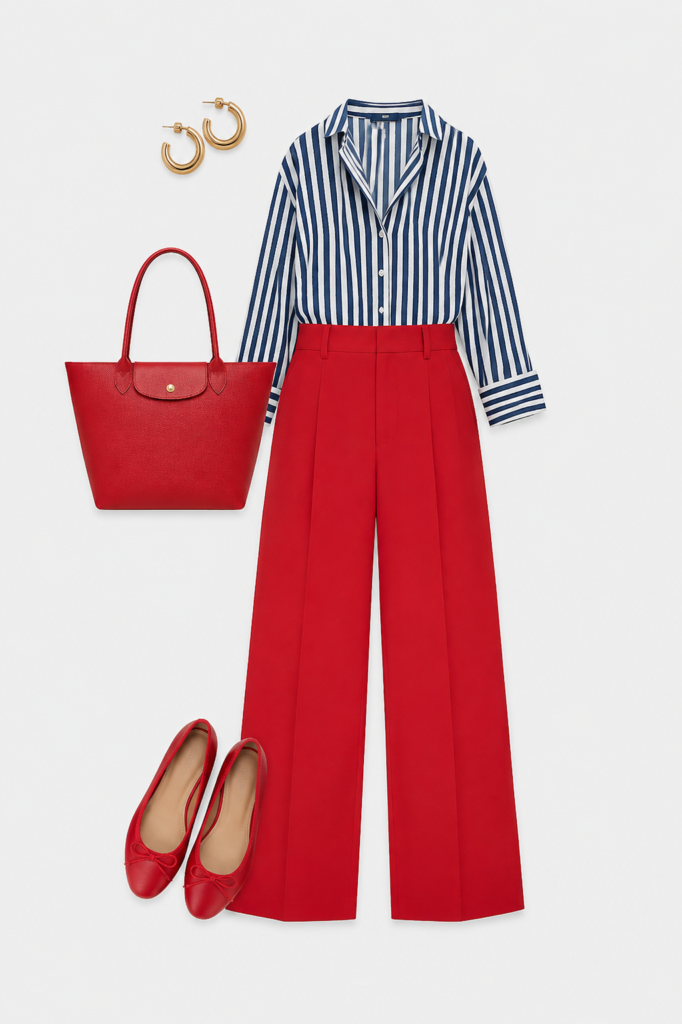
Personal style isn’t about wearing every colour available, nor is it about hiding behind neutrals.
It’s about creating balance.
Neutrals provide the structure, and colour provides the personality.
Together, they create wardrobes that feel calm, intentional and unmistakably yours.
The most stylish women rarely own the most clothes; they simply understand which colours belong together, and which colours belong to them.
When you master that, getting dressed stops feeling complicated and starts feeling effortless.
Colours are the poetry of the soul.
You Might Also Like
Style Formulas: The Secret Stylish Women Know
Capsule Wardrobes Don’t Work (Unless You Do This First)
Building a Quiet Luxury Wardrobe, Without Losing Your Personal Style