
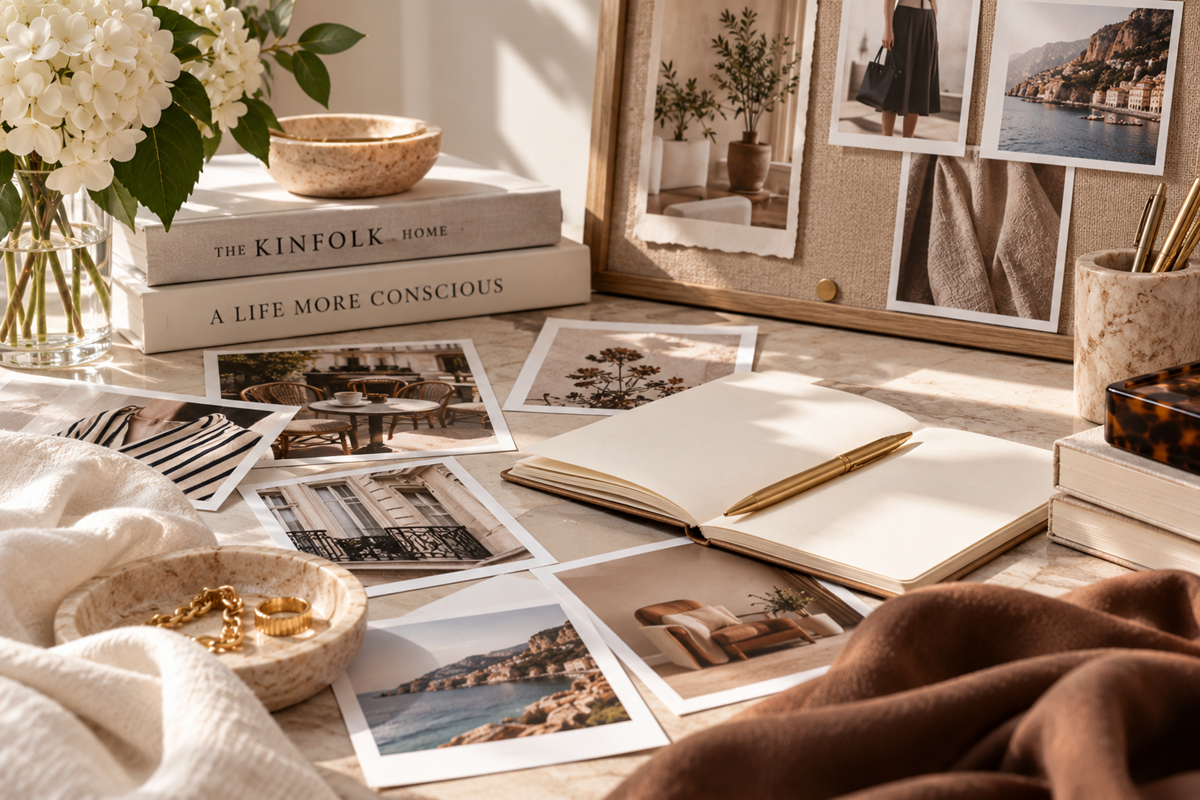
Developing Your Own Point of View
Why Knowing What You Like Matters More Than Knowing What’s Trending
Once we begin to recognise the woman we are now, another question appears, “What do I actually like?”
It sounds simple, but in a world where we are exposed to thousands of images, recommendations, trends and opinions every day, developing our own point of view may be harder than it has ever been.
We are constantly being shown what is beautiful.
- What is fashionable.
- What everyone is buying.
- What our homes should look like.
- Where we should travel.
- What we should read.
- What we should wear.
- And even what kind of life we should want.
There is nothing inherently wrong with inspiration. I love discovering beautiful clothes, interiors, books, exhibitions, places and objects.
But inspiration becomes less useful when we stop asking whether we actually like what we are seeing.
There is a difference between recognising that something is beautiful and deciding that it belongs in your life.
Taste Is Personal
Personal taste isn’t about having impeccable taste, nor is it about knowing the correct designer, artist, restaurant, wine, book or piece of furniture.
Taste is simply the ability to recognise what resonates with you.
- Some women love maximalist interiors filled with colour, art and collected objects.
- Others feel most at home surrounded by simplicity and space.
- Some women feel wonderful wearing bright colours and dramatic prints.
- Others return again and again to navy, cream, camel, black or brown.
Neither is more stylish, or more sophisticated.
They are simply different expressions of preference.
The interesting question isn’t whether something is considered tasteful, it is whether it feels like you.
When Everything Begins to Look the Same
Spend enough time online and you begin to notice something curious.
- The same handbags.
- The same shoes.
- The same interiors.
- The same restaurants.
- The same holiday destinations.
- The same “must-have” wardrobe pieces.
Algorithms are extraordinarily good at learning what captures our attention and showing us more of it.
Eventually, familiarity can begin to masquerade as preference.
We see something repeatedly and start to believe we want it. Not necessarily because we consciously chose it, but because it has become familiar.
That is worth noticing.
Personal style becomes much more interesting when we stop asking, “What is everyone wearing?”
And begin asking, “Would I have liked this if nobody had told me it was desirable?”
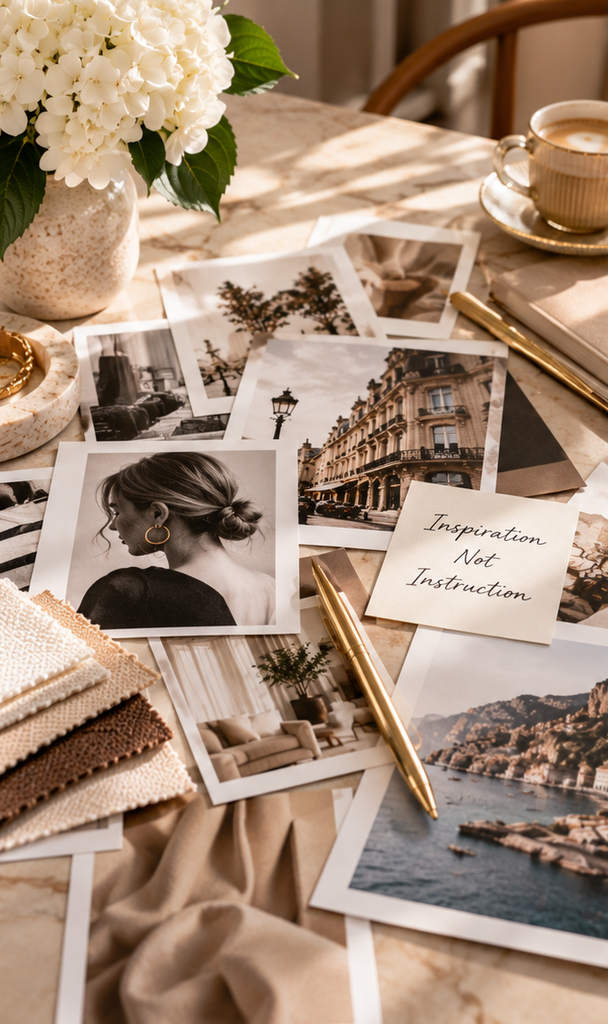
Inspiration Is Not Instruction
I don’t believe the answer is to stop looking at fashion, magazines, Pinterest, Instagram or beautiful shops.
Quite the opposite.
Exposure helps us develop taste.
We learn by looking. We notice proportions, colours, textures, combinations and ideas we may never have considered ourselves.
But inspiration works best when we treat it as information rather than instruction.
- You might admire an incredible red dress without wanting to own one.
- You might love a minimalist white interior while knowing you would never want to live in it.
- You might appreciate an extravagant designer handbag while recognising that it doesn’t suit your lifestyle.
You can appreciate beauty without needing to replicate it.
That distinction is incredibly freeing.
Pay Attention to What Stops You
One of the best ways to understand your taste is simply to notice what consistently captures your attention.
- What makes you stop when you’re walking through a gallery?
- Which book covers do you pick up?
- Which hotel interiors do you remember years later?
- Which outfits do you save?
- Which shop windows make you pause?
- Which objects do you continue to love long after you bought them?
Patterns begin to emerge.
- Perhaps you are drawn to clean architectural lines.
- Perhaps you love old things with visible history.
- Perhaps you consistently choose natural materials.
- Perhaps you prefer symmetry.
- Perhaps you love beautifully made objects that are also practical.
- Perhaps certain colours appear everywhere in your life without you consciously deciding they would.
These patterns form a visual language; a language that is yours.
Look Beyond Fashion
One of the most useful things we can do when developing personal style is stop looking only at clothes.
Fashion is just one expression of taste.
- Look at your home.
- Your bookshelves.
- Your jewellery.
- The artwork you love.
- The places you enjoy visiting.
- The hotels you remember.
- The buildings that fascinate you.
- The objects you have kept for decades.
Think about what connects them. You may discover that the qualities you value in your surroundings are remarkably similar to the qualities you want from your wardrobe.
Perhaps you value simplicity, craftsmanship, history, comfort, or elegance.
These words can tell you far more about your personal style than a list of fashion categories ever could.
Your Favourite Things Leave Clues
There is reason that certain possessions survive every declutter.
They mean something, and tell stories. But, they also reveal something about our taste.
When you look at the things you have loved for a long time, rather than the things you have recently bought, you begin to see the difference between attraction and attachment.
Trends create attraction very effectively.
Personal taste creates attachment.
You Don’t Have to Like What You’re Supposed to Like
Developing a point of view also requires giving ourselves permission to dislike things.
Even beautiful things, fashionable things, and things everyone else seems to adore.
- There are trends I can admire on other women while knowing they aren’t for me.
- There are beautiful clothes I can appreciate without wanting them in my wardrobe.
- There are celebrated interiors I would happily visit but wouldn’t want to live in.
- There are luxury objects I can recognise as exquisitely made without feeling any desire to own them.
This is where taste becomes useful. It gives us a filter.
Instead of asking whether something is objectively good, fashionable or desirable, we can ask whether it belongs in our world.
Confidence Comes From Editing
We often associate confidence with adding.
- Buying the right clothes.
- Learning more.
- Following more stylish people.
- Finding more inspiration.
But sometimes confidence comes from removing possibilities.
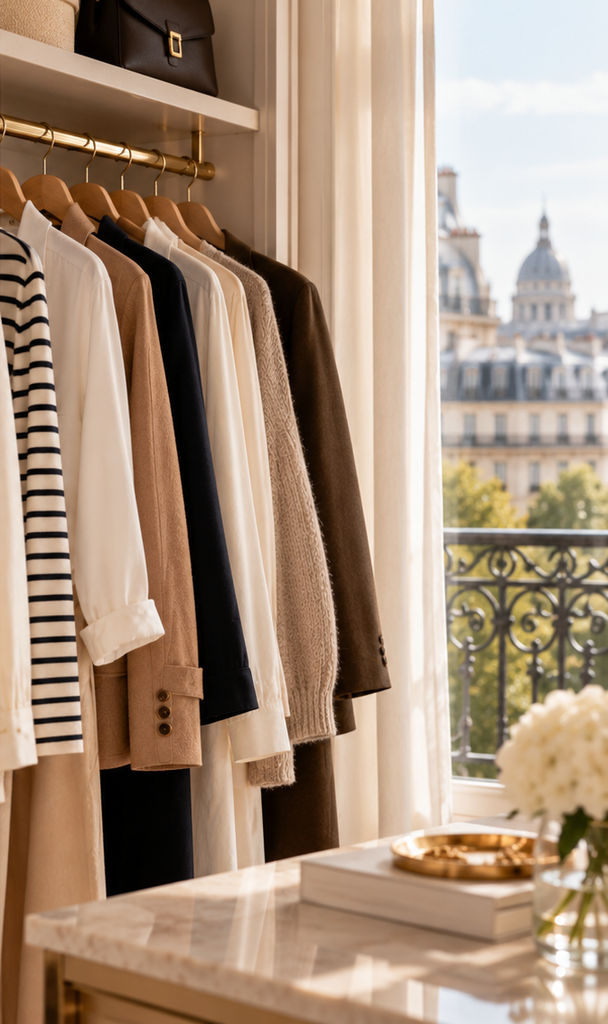
Knowing what colours you rarely wear, which silhouettes never feel right, what trends to ignore, and what purchases you don’t need to make.
Every clear preference reduces noise, and eventually, instead of facing an endless world of possibilities, you begin to operate within a world you have consciously shaped.
That is where personal style becomes easier.
Your Point of View Doesn’t Need to Be Permanent
Having a point of view doesn’t mean becoming rigid.
- Taste evolves.
- Travel changes us.
- Books change us.
- Art changes us.
- People change us.
- Age changes us.
Sometimes something we disliked ten years ago suddenly feels completely right.
Sometimes a colour we once wore constantly no longer appeals.
Sometimes we discover an artist, designer or place that opens an entirely new aesthetic world.
A strong point of view should give you direction, not confinement.
It should be stable enough to guide you, and flexible enough to grow with you.
Becoming Your Own Reference Point
Perhaps the real goal is to become capable of deciding what deserves your attention
To look at something beautiful and ask,
- Do I love this, or have I simply seen it everywhere?
- Does this reflect my taste, or someone else’s?
- Would I still want this if nobody knew I owned it?
- Does this belong in the life I am creating?
Over time, those questions become easier to answer.
You begin trusting your eye, recognising your patterns and become less concerned with what everyone else has decided is desirable.
Instead of looking outward for instructions about who to be, you begin looking inward for recognition.
You develop your own point of view, and once you do, your wardrobe becomes a very interesting place to look for evidence.
The clothes we repeatedly choose, ignore, keep and wear have been telling us something all along.
Perhaps it’s time to listen.
You can appreciate beauty without needing to replicate it.