
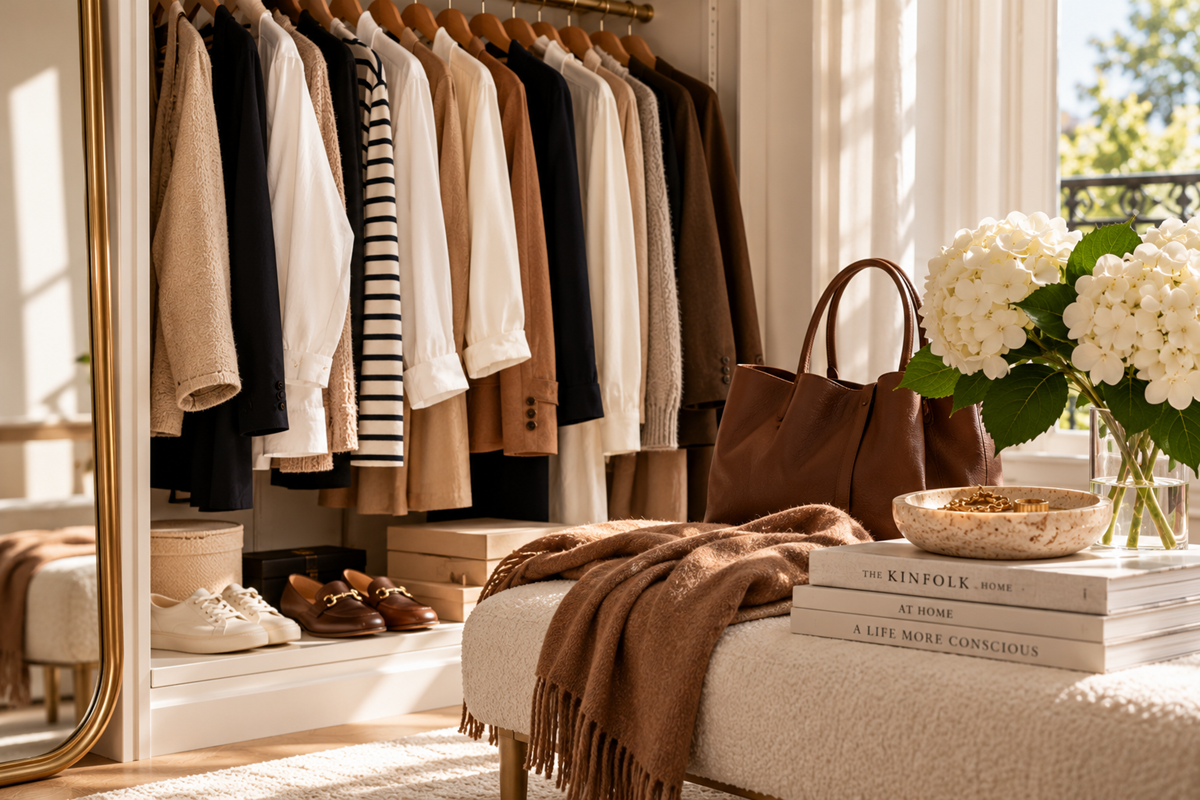
Let Your Wardrobe Tell the Truth
What Your Clothes Reveal About the Life You Actually Live
Our wardrobes are remarkably honest.
We may tell ourselves that we need more clothes, that we have nothing to wear, that our style isn’t quite right, and that one more purchase will finally make everything work.
But, before adding anything, perhaps we should look more closely at what is already there.
Because our wardrobes contain evidence.
- The clothes we repeatedly wear.
- The pieces we continually ignore.
- The things we keep buying.
- The things we admire but never actually put on.
- The purchases we regret.
- And the handful of garments we would happily wear every week.
Taken together, they tell a story.
Not necessarily about the woman we imagine ourselves to be, but about the woman we actually are.
What You Wear Matters More Than What You Own
Most wardrobes contain two very different collections.
- The clothes we own.
- And the clothes we wear.
They are rarely the same size.
There might be fifty pieces hanging in the wardrobe, yet we rotate through the same fifteen.
- We reach for the same trousers.
- The same jacket.
- The same shoes.
- The same handful of tops.
These choices aren’t boring. They’re information.
Something about those pieces works.
- Perhaps they suit your proportions.
- Perhaps they’re comfortable.
- Perhaps they work easily together.
- Perhaps they suit your lifestyle.
- Perhaps they make you feel polished without feeling overdressed.
- Perhaps, quite simply, you feel like yourself when you wear them.
Instead of criticising ourselves for repeating outfits, we could become curious about why we repeat them.
Your most-worn clothes are often the clearest clues to your personal style.
Your Unworn Clothes Have Something to Say Too
Then there are the clothes we don’t wear.
Sometimes the reason is obvious.
- They don’t fit.
- They’re uncomfortable.
- They’re damaged.
- They’re waiting for alteration.
But, sometimes there is nothing technically wrong with them.
They fit, they’re beautiful, and they may even have been expensive, and yet every time we consider wearing them, we choose something else.
This is where things become interesting.
- Perhaps the garment requires too much effort.
- Perhaps it doesn’t work with anything else.
- Perhaps it belongs to a lifestyle you don’t actually have.
- Perhaps you bought it because it looked wonderful on somebody else.
- Perhaps you loved it in the shop but don’t feel like yourself when you wear it.
- Perhaps it represents the person you thought you wanted to be rather than the person you are.
Unworn clothes aren’t necessarily mistakes.
Sometimes they are lessons.
The Difference Between Admiration and Compatibility
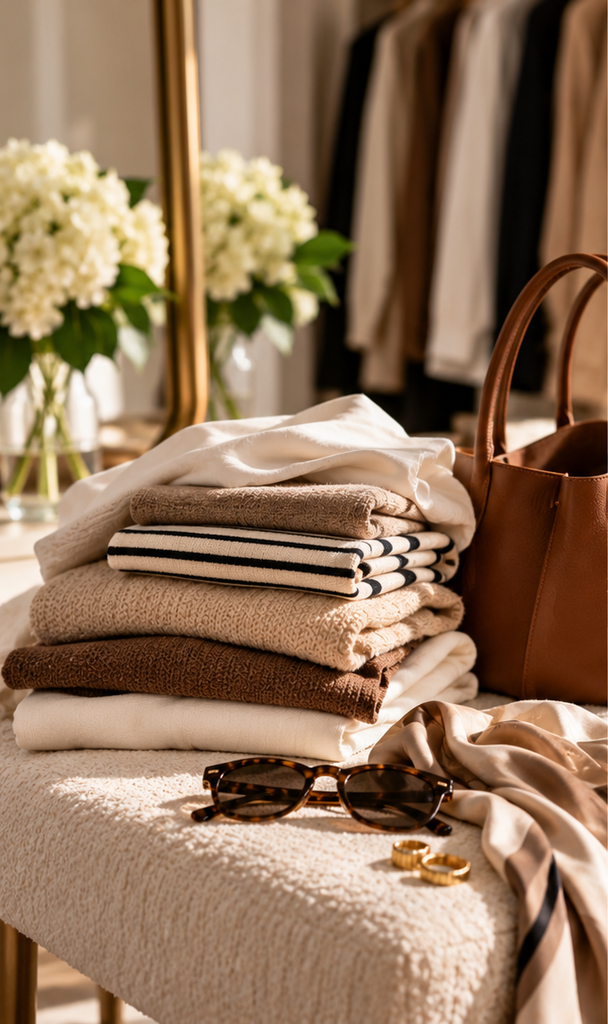
We often buy clothes because we admire them. But admiration isn’t the same as compatibility.
- A dramatic dress can be beautiful without belonging in your wardrobe.
- A pair of towering heels can be exquisite without belonging in your life.
- A minimalist beige outfit can look effortlessly elegant on somebody else while making you feel completely unlike yourself.
We can admire something without needing to own it.
The same principle applies to clothes we already have.
Instead of asking, “Is this a beautiful piece?”
Try asking, ”Is this a beautiful piece for me?”
That small distinction can explain a surprising amount of wardrobe frustration.
Look for the Repetition
If you want to understand your wardrobe, look for repetition.
Not only repeated outfits; but repeated purchases.
How many versions of essentially the same thing do you own?
- Perhaps you continually buy black trousers.
- Striped shirts.
- White sneakers.
- Floral dresses.
- Navy jackets.
- Statement earrings.
- Soft knitwear.
There is nothing inherently wrong with repetition. In fact, repetition can be one of the strongest indicators of personal style.
If you have worn wide-leg trousers for years and consistently feel good in them, perhaps you don’t need to convince yourself that you should be wearing something else simply because another silhouette is fashionable.
The problem isn’t repetition; the problem is unconscious repetition.
There is a difference between intentionally returning to something because it works, and repeatedly buying the same thing while continuing to believe your wardrobe is missing something.
Look at Your Lifestyle, Not Your Aspirations
A wardrobe can reveal the gap between the life we live and the life we shop for.
- Perhaps 70 per cent of your week is casual, but most of your shopping budget goes towards occasion wear.
- Perhaps you work from home but continue buying structured office clothing.
- Perhaps you spend weekends walking, gardening, visiting markets or having casual lunches, yet somehow keep buying clothes designed for a much more glamorous social calendar.
The issue isn’t that we should never buy something aspirational; there should absolutely be room for beauty, imagination and possibility.
But, our wardrobes need to support Tuesday morning as well as Saturday night.
The clothes we need most aren’t necessarily the clothes that create the greatest excitement in a fitting room.
Sometimes the best wardrobe purchase is simply the thing that makes everyday life work beautifully.
Notice What Makes Getting Dressed Difficult
Wardrobe frustration often gets interpreted as a shortage; “I need more clothes.”
But sometimes, the problem isn’t quantity, it’s friction.
- A blouse requires a particular bra.
- A pair of trousers only works with one pair of shoes.
- A jacket doesn’t sit properly over most of your tops.
- A skirt needs ironing every time you want to wear it.
- A beautiful garment feels slightly uncomfortable after an hour.
None of these things necessarily make the garment bad, but they do affect how useful it is.
And usefulness matters.
The easier clothes are to combine, wear and live in, the more likely they are to become part of our real wardrobe.
Your Wardrobe Is a Record of Your Decisions
Every item entered your wardrobe because of a decision.
- Some were thoughtful.
- Some were emotional.
- Some were practical.
- Some were impulsive.
- Some were influenced by sales, trends, advertising, or other people.
- Some were bought because we genuinely needed them.
Others because we were bored, celebrating, disappointed, travelling, or simply in the mood to buy something.
There is no need to judge those decisions, but there is enormous value in understanding them.
Look at the pieces you regret buying.
- Do they have anything in common?
- Were they bought on sale?
- Were they uncomfortable from the beginning?
- Were they bought for imaginary occasions?
- Did they require other purchases to make them work?
- Did you already own something similar?
Patterns of regret can be just as useful as patterns of success. Both teach us how to shop better.
The Clothes You Keep Reaching For
Now look at the opposite end of the wardrobe.
The pieces you love. Not necessarily the most expensive or fashionable pieces, but the. clothes that quietly earn their place again and again.
What do they have in common?
- Perhaps it is colour.
- Fabric.
- Shape.
- Ease.
- Versatility.
- Perhaps they make you feel elegant.
- Perhaps they make you feel relaxed.
- Perhaps they simply remove the need to think too hard about getting dressed.
This is where your wardrobe begins telling you the truth.
The answers may not match the style you thought you were supposed to have.
Good.
That means you’re learning something.
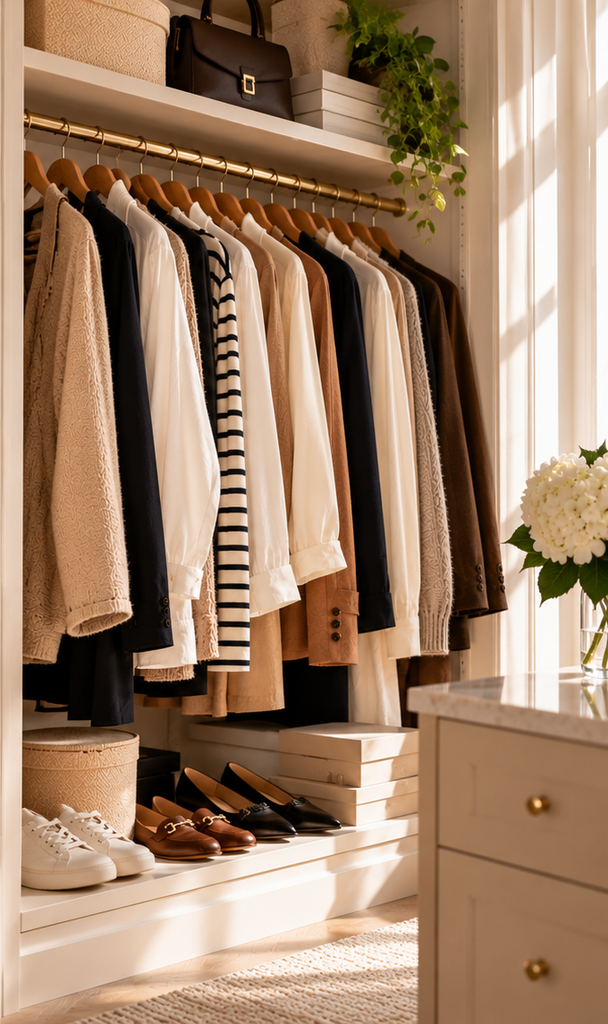
Stop Trying to Fix the Wrong Problem
One of the reasons we keep shopping is because shopping feels like action. Our wardrobe isn’t working, so we buy something new.
But, adding another garment to a wardrobe without understanding the problem can simply create more of the same problem.
If you continually struggle to create outfits, perhaps you don’t need more statement pieces. Perhaps you need better connections between the pieces you already own.
If you have plenty of clothes but dislike getting dressed, perhaps quantity isn’t the issue.
If half your wardrobe goes unworn, adding another twenty pieces isn’t going to solve it.
Sometimes the most useful thing you can do for your wardrobe is stop trying to improve it long enough to understand it.
Your Wardrobe Doesn’t Need to Impress Anyone
There is no prize for owning the most fashionable wardrobe. Nor for having the smallest one.
- You don’t need exactly thirty-three pieces.
- You don’t need a perfect capsule.
- You don’t need every wardrobe essential somebody on the internet has declared indispensable.
Your wardrobe has one primary job; to support your life and help you express yourself within it.
- That might require twenty pairs of shoes. Or five.
- It might include beautiful dresses you wear only occasionally because those occasions matter to you.
- It might contain several pairs of remarkably similar trousers because you genuinely wear all of them.
The number isn’t the point. Alignment is.
Listen Before You Add
Before your next shopping trip, spend some time with the wardrobe you already own.
- Not to declutter it.
- Not to organise it.
- Not even to decide what should go.
Just observe.
- What do you wear?
- What do you avoid?
- What do you keep buying?
- What makes getting dressed easy?
- What creates friction?
- Which pieces feel unmistakably like you?
- Which seem to belong to someone else?
Your wardrobe has been collecting this information for years.
Perhaps we don’t always need another expert, trend report or list of essentials to tell us what our style should be. Sometimes we simply need to pay attention to the evidence already hanging in front of us.
Once your wardrobe tells you the truth, something else becomes possible; you can stop constantly trying to fix it.
You can stop searching for the piece that will finally make everything complete, and perhaps you can begin to consider a very different possibility:
What if you already have enough?
That question changes more than the way we dress.
It changes the way we shop.
Your Wardrobe Doesn’t Need to Impress Anyone